
Have you got everything on your candle label?
Updated
On this page7
Every candle sold to consumers in a package needs three things on its label under the federal Fair Packaging and Labeling Act rules: what it is, how much is in it in both ounces and grams, and who made or distributes it. What else belongs on the label, on the shipping carton or in your files depends on four facts: the kind of candle, where you sell it, whether the wick has a metal core, and what you claim. Answer those, add your jar size, and the checklist returns each element as required, required in your case, expected by buyers, or never on the label, with the rule behind it and the minimum type size for your net weight.
The four questions
| Question | Choices | Why it changes the list |
|---|---|---|
| What kind of candle? | Container (jar, tin, ceramic); pillar or votive sold singly; tapers; irregular molded shape; multipack | Tapers and irregular molded candles may be declared by count and length or height instead of weight [1] |
| Where will you sell it? | In person at a market; online direct; wholesale to shops; to a large retailer; for another brand under its name | Buyers add requirements; a candle made for someone else carries their name with a qualifying phrase [2] |
| What is the wick? | Cotton, paper or wood with no metal; metal-cored (usually zinc) | A metal-cored wick brings a statement on the shipping carton and a certificate [3][4] |
| What do you claim? | Nothing beyond scent; repels insects; Made in USA; health or mood benefit; natural, clean or eco | Each claim brings its own rule, and some take the product into another agency's hands [5][6][7][8] |
Two more questions sharpen the result: whether the finished candle is made outside the United States, and whether your business has 10 or more employees and sells into California.
What the checklist returns
The table shows the logic. "Always" means every packaged candle sold to consumers.
| Element | When it applies | What it says or does | Where it goes | Rule |
|---|---|---|---|---|
| Statement of identity | Always | The common name or a descriptive term, such as "Scented soy candle"; nothing false or misleading | Principal display panel (the front label) | 16 CFR 500.4 [9] |
| Net quantity | Container, pillar, votive | Net weight of the candle alone, jar excluded, in both units: "Net Wt 8 oz (227 g)" | Bottom 30 percent of the principal display panel, at the minimum type size below | 16 CFR 500.6, 500.8 [10][11] |
| Net quantity | Tapers, irregular hand-dipped or molded shapes | Count and length or height in inches, such as "2 candles, 10 in"; adding metric (25.4 cm) is the safer course | Principal display panel | 16 CFR 501.7 [1] |
| Net quantity | Multipacks | Number of units and quantity per unit, plus the total; Kohl's lists these for multiunit candle packages | Principal display panel | Kohl's 100-Z [12] |
| Name and place of business | Always | Manufacturer, packer or distributor, with city, state and ZIP; street address unless listed in a public directory or website | Anywhere conspicuous | 16 CFR 500.5 [2] |
| Qualifying phrase | Made for another brand | "Manufactured for" or "Distributed by" before their name | With the name | 16 CFR 500.5 [2] |
| Country of origin | Finished candle made outside the U.S. | The English name of the country, conspicuous | On the article, or its container if exempt | 19 U.S.C. 1304 [13] |
| Cautionary labeling | The candle contains a hazardous substance under the Federal Hazardous Substances Act | Signal word, hazard, precautions, first aid, "Keep out of the reach of children" and other elements | Label | CPSC guidance [3]; 15 U.S.C. 1261(p) [14] |
| Pesticide labeling | Repellent claim | Either federal registration, or every minimum-risk condition, including active ingredients by name and percent, all inerts, and a street address, ZIP and phone number; states may also require registration | Label | 40 CFR 152.25(f) [5] |
| Proposition 65 warning | 10 or more employees, selling into California, and an exposure to a listed chemical | The warning OEHHA prescribes; businesses with fewer than 10 employees are exempt | Label or point of sale | OEHHA FAQ [15] |
| Fire safety warning | Always expected; required in practice by large retailers | Safety alert symbol with "WARNING" and text, or pictograms, on the unit of sale | Visible at the point of sale | ASTM F2058-07(2021) scope [16]; Kohl's requires an F2058 label and adds its own lines on burn time and drafts [12] |
| Burn instructions | Recommended for every candle | Trim to 1/4 inch before each use; stop when 1/2 inch of wax remains; keep away from things that can catch fire | Back or bottom label, or a card | National Candle Association tips [17] |
| Lot or batch code | Recommended | Ties the candle to its batch record | Base or back label | No rule requires it |
| Retailer extras | Large retailer | Kohl's asks for count, length or height, diameter or width and net weight on regularly shaped candles, country of origin visible at the point of purchase, and a tracking label (factory number, month and year of manufacture, UPC) where space allows | As the buyer specifies | Kohl's 100-Z [12] |
| "Conforms to 16 CFR 1500.17(a)(13)" | Metal-cored wick | Required on each outer shipping container or wrapper; the retail display container is exempt unless it is the only container the candle ships in | Shipping carton, never the candle label | 16 CFR 1500.17(a)(13) [4] |
| General Certificate of Conformity | Metal-cored wick | A certificate that must accompany each product or shipment and be furnished to each distributor or retailer, kept with its supporting records at least 5 years | In your files and with shipments | CPSC guidance [3]; 16 CFR 1110.13 [18]; 16 CFR 1110.17 [20] |
Never on the candle label
- The lead wick statement. It belongs on the shipping carton [4], as lead in wicks explains case by case.
- Qualifying words in the net quantity, such as "jumbo," "full" or "minimum" [10].
- Ingredients that are not present "in a substantial or significantly effective amount" [9].
- A claim that the candle treats or relieves a condition. FDA lists claims such as relieving pain, treating anxiety or helping you sleep as drug claims [7].
- "Made in USA" unless final assembly or processing, all significant processing, and all or virtually all ingredients or components are in or from the United States [6].
- Environmental claims you cannot substantiate. The FTC's Green Guides set out how environmental claims such as "eco-friendly" are judged [8]; what you can call your candle goes through "natural," "clean" and the rest.
Type size from your jar
The net quantity has a minimum letter height set by the area of the principal display panel. For a round jar, that area is "40 percent of the product of the height of the container or commodity times the circumference"; for a box with one side clearly facing the shopper, it is the height times the width of that side [19]. Measure the jar, not the label.
| Panel area | Minimum height of the net quantity [19] |
|---|---|
| 5 sq in or less | 1/16 in (1.5 mm) |
| Over 5 to 25 sq in | 1/8 in (3.1 mm) |
| Over 25 to 100 sq in | 3/16 in (4.7 mm) |
| Over 100 sq in | 1/4 in (6.35 mm); 1/2 in above 400 sq in |
A jar 3 inches across with a 3.5 inch body: circumference 9.42 in, times 3.5, times 0.4, is 13.2 sq in, so 1/8 inch letters. A jar 5 inches across and 5 inches tall comes to 31.4 sq in and needs 3/16 inch. More on placement and separation from other text is on stating net weight on a candle.
Three labels, checked
A jar candle sold at a market. Cotton wick, no claims, 3 in by 3.5 in jar, 8 oz of candle. Required: identity, "Net Wt 8 oz (227 g)" in the bottom 30 percent at 1/8 inch or larger, name and place of business. Expected: the fire safety warning and burn instructions. Recommended: a batch code. No carton statement and no certificate, because the wick has no metal core.
Tapers wholesaled to gift shops. A pair of 10 inch tapers dipped abroad and sold as "Made in USA." Required: identity, "2 candles, 10 in (25.4 cm)", name and place of business, and the country of origin. The checklist flags the Made in USA claim as a conflict: a candle made outside the United States cannot meet the test in 16 CFR 323.2 [6].
A jar candle for a large retailer, with a zinc-cored wick and a bug claim. 5 in by 5 in jar, 14 oz, from a business with 25 employees that ships to California. Required: identity, "Net Wt 14 oz (397 g)" at 3/16 inch or larger, name and place of business, the F2058 warning the buyer requires, pesticide labeling or registration for the repellent claim, and a Proposition 65 review. On the shipping carton: "Conforms to 16 CFR 1500.17(a)(13)." In the files: a General Certificate of Conformity. The checklist also flags a conflict: Kohl's protocol states "No metal core allowed in wick" [12], so ask the buyer before you build the candle around that wick.
What the checklist cannot decide
- Whether your candle is a hazardous substance. Most finished candles are not labeled that way, but the checklist cannot read your formula. Ask CPSC's Small Business Ombudsman, (888) 531-9070, if you are unsure [3].
- Whether a Proposition 65 warning is needed, beyond the employee count. That depends on what is in the candle and its parts; see state rules that apply to candles.
- Whether your jar or tin counts as packaging under state toxics-in-packaging laws. Boxes, labels and cartons do; the status of a vessel that holds the candle while it burns is unresolved, so ask the Toxics in Packaging Clearinghouse or your state agency (state rules).
- A buyer's own label requirements. Get them in writing.
- Whether the label will stay on. Label stock and adhesive on glass and tins are covered on labels that stay on a candle.
The checklist reflects federal rules and one retailer's published protocol as read in October 2026; confirm with the FTC, CPSC or your state weights and measures office before a large print run.
Before you order a full print run
Print one label, put it on a filled jar, and check it against the list in the shop light where it will be sold. Then read the wording of the warning itself, which has its own page: the candle warning label.
| Display panel | 13.2 sq in |
|---|---|
| Smallest type for net contents | 1/8 in (3.1 mm) |
| Required | Statement of identity (16 CFR 500.4) |
| Net Wt 8 oz (227 g); bottom 30 percent of the display panel; minimum type 1/8 in (3.1 mm) (16 CFR 500.6, 500.8, 500.21) | |
| Name and place of business (16 CFR 500.5) | |
| Check | FHSA cautionary labeling if the candle contains a hazardous substance; ask the CPSC Ombudsman |
| Expected | ASTM F2058 warning (voluntary, and expected by buyers) |
| Recommended | Burn instructions |
| Batch code | |
| Note | No carton statement and no certification requirement for a nonmetal-cored wick |
| Never on label | A lead statement on the candle label; qualifying words in the net quantity; ingredients not present in a substantial or significantly effective amount |
Top picks
Top containers for candles 4 oz · 58-400 · Glass · Amber · 2.6 in
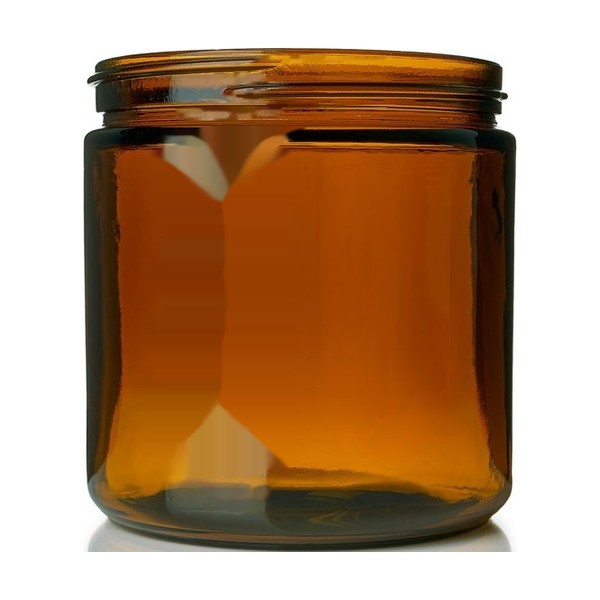 16 oz · 89-400 · Glass
 9 oz · 70-400 · Glass
 4 oz · 58-400 · Glass · Clear
 4 oz · 58-400 · Glass · Amber · 2.7 in
 6 oz · 63-400 · Glass
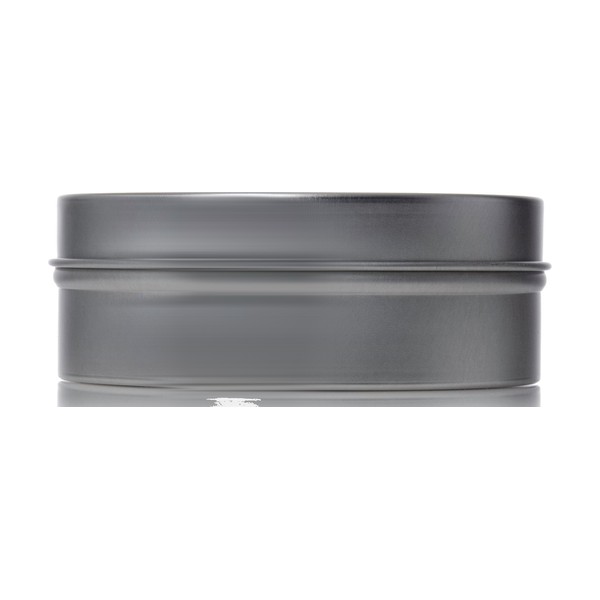 4 oz · Steel
 12 oz · 63-400 · Glass
References
- 16 CFR 501.7, Candles (Legal Information Institute, Cornell Law School), 36 FR 5690, March 26, 1971, read October 22, 2026; text matches the eCFR reproduction on CustomsMobile (last checked October 22, 2026). https://www.law.cornell.edu/cfr/text/16/501.7
- 16 CFR 500.5, Name and place of business of manufacturer, packer or distributor (Legal Information Institute, Cornell Law School), as amended at 80 FR 71689, November 17, 2015, read October 22, 2026. https://www.law.cornell.edu/cfr/text/16/500.5
- U.S. Consumer Product Safety Commission, Candles Business Guidance, undated, read October 22, 2026. https://www.cpsc.gov/Business--Manufacturing/Business-Education/Business-Guidance/Candles
- 16 CFR 1500.17, Banned hazardous substances, paragraph (a)(13) (Legal Information Institute, Cornell Law School), as amended at 68 FR 19147, April 18, 2003, read October 22, 2026. https://www.law.cornell.edu/cfr/text/16/1500.17
- 40 CFR 152.25, Exemptions for pesticides of a character not requiring FIFRA regulation (Legal Information Institute, Cornell Law School), read October 22, 2026. https://www.law.cornell.edu/cfr/text/40/152.25
- 16 CFR 323.2, Prohibited acts (Made in USA Labeling) (Legal Information Institute, Cornell Law School), read October 22, 2026. https://www.law.cornell.edu/cfr/text/16/323.2
- U.S. Food and Drug Administration, Aromatherapy, content current as of September 8, 2023. https://www.fda.gov/cosmetics/products/aromatherapy
- 16 CFR Part 260, Guides for the Use of Environmental Marketing Claims (Legal Information Institute, Cornell Law School), read October 22, 2026. https://www.law.cornell.edu/cfr/text/16/part-260
- 16 CFR 500.4, Statement of identity (Legal Information Institute, Cornell Law School), read October 22, 2026. https://www.law.cornell.edu/cfr/text/16/500.4
- 16 CFR 500.6, Net quantity of contents declaration, location (Legal Information Institute, Cornell Law School), read October 22, 2026. https://www.law.cornell.edu/cfr/text/16/500.6
- 16 CFR 500.8, Units of weight or mass and measure (Legal Information Institute, Cornell Law School), read October 22, 2026. https://www.law.cornell.edu/cfr/text/16/500.8
- Kohl's, Private Brands Performance Claims Test Protocols 100, Protocol 100-Z: Candle (including freestanding, taper, tealight, votive, filled and novelty candles), revised February 2025 (candle limits unchanged from 100-Y, February 2023; adds the 1800 Hardlines Regulatory Supplement). https://link.kohls.com/content/dam/klink/100-Z-CANDLE.pdf
- 19 U.S.C. 1304, Marking of imported articles and containers (Legal Information Institute, Cornell Law School), read October 22, 2026. https://www.law.cornell.edu/uscode/text/19/1304
- 15 U.S.C. 1261, Definitions (Federal Hazardous Substances Act) (Legal Information Institute, Cornell Law School), read October 22, 2026. https://www.law.cornell.edu/uscode/text/15/1261
- California Office of Environmental Health Hazard Assessment, Frequently Asked Questions for Businesses (Proposition 65), undated, read October 22, 2026. https://www.p65warnings.ca.gov/businesses/frequently-asked-questions-businesses
- ASTM International, ASTM F2058-07(2021) Standard Specification for Candle Fire Safety Labeling (store scope page), last updated May 24, 2022. https://store.astm.org/f2058-07r21.html
- National Candle Association, Candle Safety Tips, modified August 12, 2025. https://candles.org/candle-safety/
- 16 CFR 1110.13, Certificate availability, as revised at 90 FR 1843, January 8, 2025 (Legal Information Institute, Cornell Law School); wording confirmed on the eCFR reproduction at CustomsMobile, read October 22, 2026. https://www.law.cornell.edu/cfr/text/16/1110.13
- 16 CFR 500.21, Type size in relationship to the area of the principal display panel (Legal Information Institute, Cornell Law School), read October 22, 2026. https://www.law.cornell.edu/cfr/text/16/500.21
- 16 CFR 1110.17, Recordkeeping requirements, as revised at 90 FR 1843, January 8, 2025 (eCFR reproduction, CustomsMobile), read October 22, 2026. https://www.customsmobile.com/regulations/expand/title16_chapterII_part1110_section1110.17