Do you need a certificate of conformity for your candles?
Updated
On this page10
Only if your candles use metal-cored wicks. CPSC requires a General Certificate of Conformity (GCC) for metal-cored candlewicks and the candles made with them, citing the lead rule, 16 CFR 1500.17(a)(13). For cotton, paper-cored and wood wicks, CPSC says there is no certification requirement at all. A GCC is a document you write yourself: no agency issues it, no template is required, and it does not have to come from a lab, though it must rest on testing or a reasonable testing program. This page explains who must issue one, the seven things it must contain, how a one-person maker builds one from a wick supplier's documentation, and who you must give it to.
Conformity or compliance: the name
You will see two names for the same document. CPSC's own page for it is headed "General Certificate of Conformity" [1]. The regulation that governs it, 16 CFR Part 1110, is titled "Certificates of Compliance," the umbrella term for both the GCC and the Children's Product Certificate [2]. CPSC's candle guidance page calls it a "General Certificate of Compliance (GCC) for general-use products" [3]. All three refer to one document, abbreviated GCC. This page uses CPSC's page heading: General Certificate of Conformity.
Which wicks need a certificate
| Your wicks | Certificate | CPSC source |
|---|---|---|
| Cotton, paper-cored, hemp or wood, no metal | None. CPSC states that no certification requirement applies to nonmetal-cored wicks or to candles that use them | Candles Business Guidance [3] |
| Zinc-cored or any other metal core | A GCC citing "16 CFR § 1500.17(a)(13)" for metal-cored candlewicks | Candles Business Guidance [3] |
| You sell metal-cored wicks to other makers | A GCC for the wicks | Candles Business Guidance [3] |
A candle designed or intended primarily for children is a different matter. Children's products follow separate certification requirements under the Children's Product Certificate [1], which are outside the scope of this page. If you make candles marketed to children, ask CPSC before you sell.
Who issues it
The duty falls on whoever is the "finished product certifier" [4]:
- A candle made in the United States: the manufacturer, which for a home maker is you [4].
- A candle made in the United States under a private label: the private labeler, unless the manufacturer issues the certificate [4]. If you make candles for someone else's brand, agree in writing who certifies; see making candles under someone else's brand.
- A candle made abroad: the importer [4].
Retailers who buy finished candles do not certify them; they receive the certificate.
The seven required elements
16 CFR Part 1110 was rewritten by a final rule published January 8, 2025 (90 FR 1843) [2]. Its section on content, 1110.11, now lists seven elements every finished product certificate must carry [8]. CPSC's GCC page still describes seven elements under the older titles, with a separate line for the third-party laboratory, and says no template or format is required as long as the required elements are present; it also says the GCC and supporting information must be in English [1]. Where the two differ, follow the current rule.
| No. | Element under 16 CFR 1110.11(a) [8] | What it must include [8] |
|---|---|---|
| 1 | The finished product the certificate covers | At least one unique identifier (GTIN, model number, registered number, serial number, SKU, UPC or another identifier) and a description detailed enough to match the certificate to the product; lot number, style and color may be added |
| 2 | Each rule the product is certified to | Each applicable rule, ban, standard or regulation, listed separately |
| 3 | The finished product certifier | Name, street address, city, state or province, country, email address and telephone number |
| 4 | The person who keeps the records | The same contact details for the individual maintaining the records 1110.17 requires; a position title may stand in for a name if the position is always staffed and answers CPSC |
| 5 | Date and place of manufacture | Month and year at a minimum (the first day, for a run over several days), and the manufacturer's name, street address, city, state or province, country, email address and telephone number |
| 6 | Most recent date and place of testing | The testing date and place, and the full contact details of each third-party lab or other party whose testing the certificate relies on; where a testing exclusion applies, the exclusion is named instead |
| 7 | The certifier's attestation | A statement that the product complies with the rules listed and that the certificate is true and accurate, with an acknowledgment that a knowingly false statement on it is a federal crime; paper and non-eFiled electronic certificates carry the text set out in the rule |
A worked example for a small maker
Here is how the seven elements might be filled in by a one-person maker who uses zinc-cored wicks. The business, product and supplier details are invented to show the layout. The rule citation is the real one CPSC gives [3].
| No. | Example entry |
|---|---|
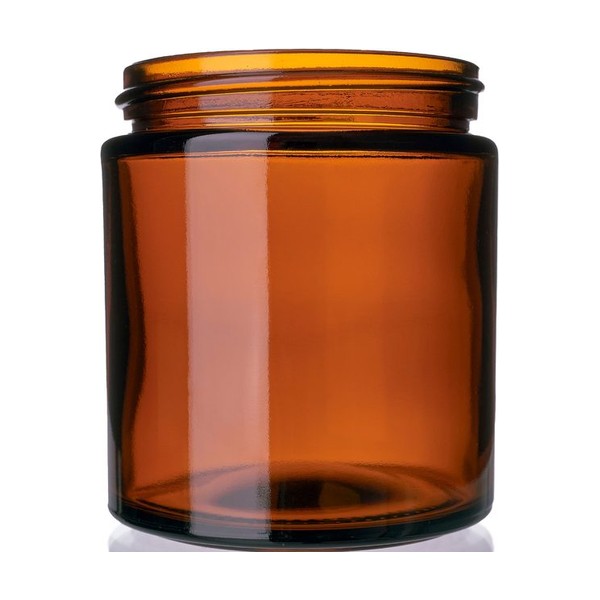
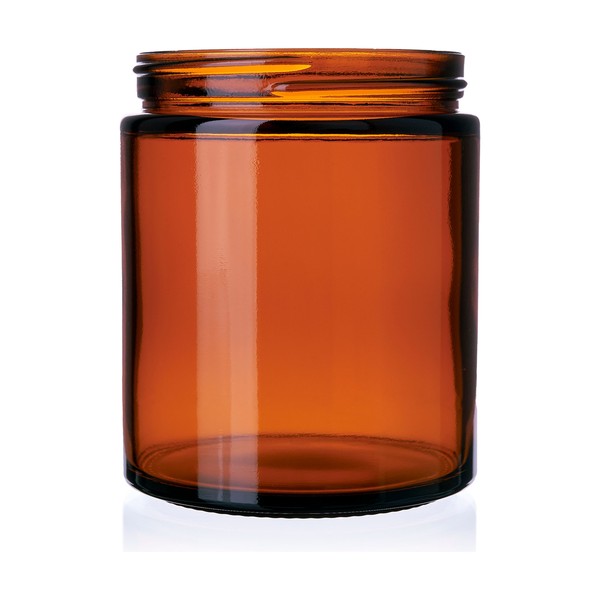
| 1 | SKU HF-08: "Harbor Fig" 8 oz (227 g) scented soy candle in a 3 in diameter amber glass jar, one zinc-cored wick (supplier series and size as on the supplier certificate), lots HF-0601 to HF-0630 |
| 2 | 16 CFR § 1500.17(a)(13), Metal-cored candlewicks |
| 3 | Example Candle Co., 123 Main St, Anytown, ST 00000, USA, hello@example.com, (555) 555-0100 |
| 4 | Jane Maker, owner, same address, jane@example.com, (555) 555-0100 |
| 5 | June 2026, Example Candle Co., 123 Main St, Anytown, ST 00000, USA, hello@example.com, (555) 555-0100 |
| 6 | Wick supplier's lead test report dated May 4, 2026, with the name, street address, city, state, country, email and telephone of the supplier or laboratory that tested, as on its report |
| 7 | The attestation text from 16 CFR 1110.11(a)(7), dated and signed by Jane Maker |
The testing behind entry 6 is the part to get right. CPSC says a GCC must be based on "testing or a reasonable testing program" and directs firms to its GCC FAQs for what that means [1]. The 2003 lead rule itself said firms may test, or may "obtain assurances from suppliers that the lead content of the metal does not exceed 0.06 percent by weight" [5]. In practice a maker buying zinc wicks asks the wick supplier for its own certificate and the test report behind it, for the specific wick series and lot.
To build your certificate from a supplier's documents:
- Ask the supplier for its GCC for the wick series you buy, and for the lead test report it relies on.
- Check that the supplier's certificate cites 16 CFR 1500.17(a)(13) and names the wick series and, ideally, the lot you received.
- Record the wick lot in each batch record, so every candle maps to a supplier certificate.
- Write your own GCC for each candle product, citing the supplier's test as the testing in element 6.
- Issue a new certificate, or update the one you have, when you change wick supplier, series or lot coverage.
- If the supplier cannot document its lead content, switch to a nonmetal-cored wick or have the wick tested yourself; do you need a lab covers how to get a quote.
Whether a supplier's test alone is a "reasonable testing program" for your certificate is CPSC's call to make. Ask CPSC's Small Business Ombudsman at (888) 531-9070 or SBO@cpsc.gov [3].
Who gets the certificate, and when
16 CFR 1110.13, "Certificate availability," sets these duties for products made in the United States, paraphrased here [6]:
- A certificate must accompany each finished product or each finished product shipment, and each certificate describes only one product.
- For products made in the United States, the certifier issues it on or before the date the product is distributed in commerce.
- The certifier must furnish the certificate to each distributor or retailer of the finished product.
- Certificates must be made available to CPSC or CBP "immediately, meaning within 24 hours," of a request [6].
For a maker selling to shops, that means sending the GCC with each wholesale order or giving each shop a copy it can find again, and keeping your copy where you can produce it within a day.
Importers: eFiling from July 8, 2026
CPSC's GCC page states that beginning July 8, 2026, importers of most regulated consumer products must electronically file certificate data with U.S. Customs and Border Protection [1]. The rule requires importers to eFile the certificate data elements in CBP's ACE system when they file the entry, and to enter them in CPSC's Product Registry before arrival for imports by mail [6]. A law firm summary dated July 15, 2026 reports that importers submit the data at entry regardless of shipment size or value, and that entries from Foreign Trade Zones follow on January 8, 2027 [7]. If you import candles or metal-cored wicks, ask your customs broker how they will file; domestic makers who do not import are not described as having an eFiling duty [7].
Keeping the certificate and its records
16 CFR 1110.17, "Recordkeeping requirements," requires the certifier to keep each finished product certificate, and the test results and other records on which a GCC is based, for at least five years from the date the certificate was created [9]. For a maker, that means each certificate, the supplier certificate and test report it relies on, and the batch records that tie each lot of candles to a wick lot. Keep them longer if a retailer's contract says so, and keep them where you can produce them within 24 hours [6]. Records a candle business keeps covers a record system.
Where the carton statement fits
The certificate travels with the rule's other duty, the conformity statement on outer shipping cartons. Lead in wicks: the one federal candle rule shows where that statement goes in each shipping case.
References
- U.S. Consumer Product Safety Commission, General Certificate of Conformity, undated, read October 22, 2026. https://www.cpsc.gov/GCC
- 16 CFR Part 1110, Certificates of Compliance, as revised at 90 FR 1843, January 8, 2025, and corrected at 90 FR 45917, September 24, 2025 (Legal Information Institute, Cornell Law School), read October 22, 2026. https://www.law.cornell.edu/cfr/text/16/part-1110
- U.S. Consumer Product Safety Commission, Candles Business Guidance, undated, read October 22, 2026. https://www.cpsc.gov/Business--Manufacturing/Business-Education/Business-Guidance/Candles
- 16 CFR 1110.7, Who must certify finished products, as revised at 90 FR 1843, January 8, 2025 (eCFR reproduction, ecfr.io, edition updated October 19, 2026), read October 22, 2026. https://ecfr.io/Title-16/Section-1110.7
- U.S. Consumer Product Safety Commission, Metal-Cored Candlewicks Containing Lead and Candles With Such Wicks; Final Rule, 68 FR 19142, April 18, 2003. https://www.govinfo.gov/content/pkg/FR-2003-04-18/pdf/03-9255.pdf
- 16 CFR 1110.13, Certificate availability, as revised at 90 FR 1843, January 8, 2025 (eCFR reproduction, CustomsMobile, checked for updates October 22, 2026), read October 22, 2026. https://www.customsmobile.com/regulations/16/1110.13
- Akin Gump Strauss Hauer & Feld, CPSC Rule Mandates eFiling of Certificates of Compliance for Imported Consumer Products, July 15, 2026. https://www.akingump.com/en/insights/alerts/cpsc-rule-mandates-efiling-of-certificates-of-compliance-for-imported-consumer-products
- 16 CFR 1110.11, Certificate content, as revised at 90 FR 1843, January 8, 2025 (eCFR reproduction, CustomsMobile, checked for updates October 22, 2026), read October 22, 2026. https://www.customsmobile.com/regulations/16/1110.11
- 16 CFR 1110.17, Recordkeeping requirements, as revised at 90 FR 1843, January 8, 2025 (eCFR reproduction, CustomsMobile, checked for updates October 22, 2026), read October 22, 2026. https://www.customsmobile.com/regulations/16/1110.17