
How do I keep a candle from tipping?
Updated
On this page7
A candle stays upright when its base is wide and heavy enough for its height, and when the holder it burns in is too. Stability is one of the four leading causes of candle fires the ASTM candle committee identified [1], and the test used to check it is simple: the candle, or the candle in its holder, must stay standing on a 10 degree incline. ASTM F2601 applies that test to candles and holders together [1], and Kohl's, in the protocol it uses for candles it buys, fails any candle that tips at 10.0 degrees [2]. This page shows how to run the incline test at home, what to change when a candle fails, and how holders fit in.
The incline test, as the sources describe it
ASTM's own summary says the fire safety standard for candles, F2417, "prescribes tipover limits," and that F2601, the standard for candle accessories, "includes a test in which a candle and its holder must remain standing on a 10-degree incline to be acceptable" [1]. F2601's active edition is F2601-25, and its published abstract lists test methods for "identifying stability of candle accessories" [3]. Both standards are voluntary in law; retailers write them into their buying requirements (the ASTM candle standards).
Kohl's Test Protocol 100-Z (February 2025, with the same limits as 100-Y of February 2023), citing F2417-17 section 4.5, sets out three requirements [2]:
- Freestanding and filled candles, including tealights and ensembles, must not tip over on an incline of 10.0° (-0°/+0.5°) from horizontal. The tolerance means the board is at 10.0 to 10.5 degrees, never below 10.
- Asymmetrical candles and ensembles must not tip at that incline in any position as they are rotated around the vertical axis.
- Freestanding candles must not tip over on a level surface.
The protocol also requires that a freestanding candle's flame not impinge on the surface it stands on, which matters for short, wide or leaning shapes [2]. These are one retailer's requirements and carry no legal force. The published protocol does not say whether its tip test is run lit or unlit, or at what point in the burn.
Running it at home
You need a flat, rigid board, a ruler or a phone level, and something non-slip for the board's surface so the candle tips rather than slides.
- Set the angle. For a board of length L laid as a ramp, raise one end by L × 0.174 for 10 degrees and L × 0.182 for 10.5 degrees (the sine of each angle). On a 12 inch board that is a rise of 2.08 to 2.19 inches; on a 300 mm board, 52 to 55 mm. A phone's level or inclinometer reading on the board is a quicker check.
- Stop the slide. Cover the board with a rubber mat or fine sandpaper. A candle that slides off has not been tested for tipping.
- Place the candle in the middle of the board, unlit, as it will be sold, with lid off. For a candle sold with a holder, test the two together.
- Rotate it. Turn it in steps (every 45 degrees is a practical choice) through a full circle, letting it settle at each step. Any shape that is not round, and any candle with a handle, lip or offset wick, gets every step.
- Repeat part-burned. A candle's weight shifts as it burns, so repeat the test at roughly half height and near the end, cooled and solid. This page suggests that step; Kohl's published text does not say when its test is run.
- Record the result with the angle, the step that failed and a photo (keeping burn test records).
Never run the test with a lit candle or liquid wax. The National Candle Association tells consumers not to move a candle while the wax is liquid [4], and a candle that fails a tip test lit is a fire.
What to change when a candle tips
| What fails | Likely cause | What to change |
|---|---|---|
| A tall, narrow pillar tips at 10 degrees | Base too narrow for its height | A wider base, a shorter candle, or sell it with a holder that passes the test |
| A container tips when part-burned | Most of the weight was wax; the empty vessel is top-heavy or light | A vessel with a heavier or wider base |
| An asymmetrical shape tips at one rotation only | Its center of weight sits off-center | Change the shape, or the wick position, and retest at every rotation |
| A candle passes alone but tips in its holder | The holder is the weak point | A wider, heavier holder; test candle and holder together, as F2601 does [1] |
| A candle rocks on a level surface | An uneven or domed base | Level the base (pillars), or reject the vessel |
None of the sources cited here gives a minimum base-to-height ratio, so this page gives none. The incline test is the measure.
Pillars, votives and tealights need holders
The National Candle Association tells consumers to use sturdy candle holders that will not tip over easily and to set candles on stable, heat-resistant surfaces [4]. For a freestanding pillar, a holder is also what catches wax if the pillar guttering runs over. Votives are designed to liquefy completely and must burn in a holder; tealights burn in their cups. Both are covered on votives and tealights, and pillars on how to make a pillar candle.
A holder you sell with a candle is a candle accessory, the subject of F2601, which covers the flammability of components in candle rings and holders as well as the stability of the candle and holder together [1]. A decorative ring or wrap that can catch fire belongs on secondary ignition.
What to tell customers
Tell customers to burn the candle on a flat, stable, heat-resistant surface and in a sturdy holder where one is needed, which matches the NCA's advice [4]. Care card wording, and what else belongs on it, is on burn instructions to give customers.
Putting the tip test into the full test
Stability is one item in a full burn test, alongside flame height, container temperature and secondary ignition. How to burn test a candle sets out the whole protocol and where the incline test sits in it.
Top picks
Top containers for candles 4 oz · 58-400 · Glass · Amber · 2.6 in
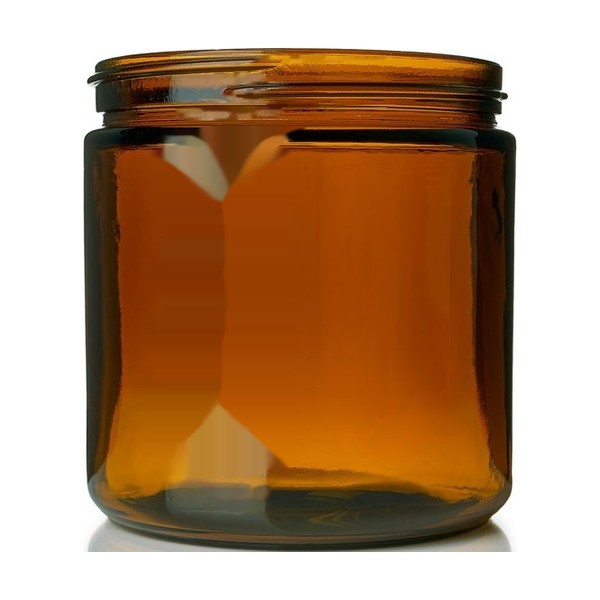 16 oz · 89-400 · Glass
 9 oz · 70-400 · Glass
 4 oz · 58-400 · Glass · Clear
 4 oz · 58-400 · Glass · Amber · 2.7 in
 6 oz · 63-400 · Glass
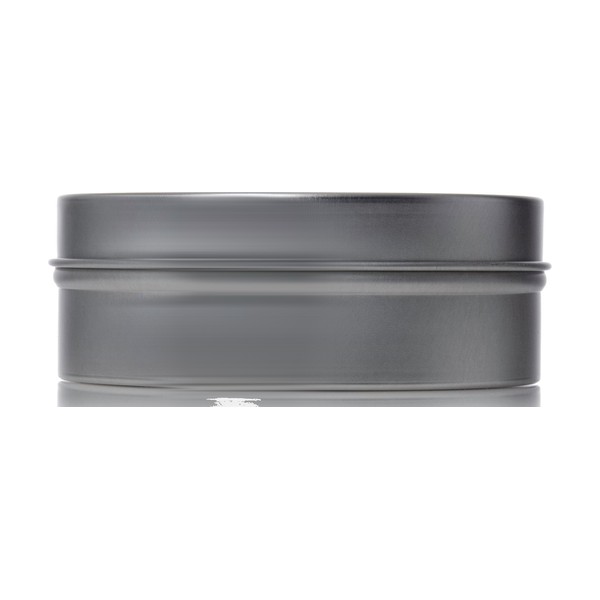 4 oz · Steel
 12 oz · 63-400 · Glass
References
- Doug Clauson, Increasing Candle Safety, ASTM Standardization News, March/April 2013, posted July 26, 2016. https://www.astm.org/news/increasing-candle-safety-ma13
- Kohl's, Private Brands Performance Claims Test Protocols 100, Protocol 100-Z: Candle (including freestanding, taper, tealight, votive, filled and novelty candles), revised February 2025 (current revision; candle limits unchanged from 100-Y, February 2023), read October 22, 2026. https://link.kohls.com/content/dam/klink/100-Z-CANDLE.pdf
- ASTM International, ASTM F2601-25 Standard Specification for Fire Safety for Candle Accessories (store page, active), last updated June 5, 2025. https://store.astm.org/f2601-25.html
- National Candle Association, Candle Safety Tips, modified August 12, 2025. https://candles.org/candle-safety/