
Why did my candle jar crack?
Updated
On this page9
A candle jar cracks when the glass is heated unevenly or too far: a flame that touches the side, wicks set too close to the wall, a candle burned down to the last of its wax, sessions run far past four hours, or glass never made to take a candle's heat. Thermal shock, the stress from one part of the glass being much hotter than another, is what breaks it. A cracked jar is a burn, cut and fire hazard, and CPSC has recalled candles for exactly this as recently as February 2026 [1]. This page lists the causes, what the recalls show, how to check your own candles, and when to stop selling a jar.
Stop first
If a jar cracks, chips or makes a sound while burning, put the candle out with a snuffer or by blowing gently, not with water, which the National Candle Association (NCA) warns can make hot wax splatter [2]. Leave it where it is. The NCA tells consumers not to move a candle while the wax is liquid and not to touch it until the wax has completely cooled [2]. Do not relight it.
What the recalls show
Three recent CPSC notices involve glass jar candles that cracked or broke in use. They are worth reading closely because they span a small Oregon maker, a gift company and a national chain.
| Date and recall | Candle | Hazard, in CPSC's words | Reports | What buyers were told |
|---|---|---|---|---|
| August 10, 2023 (23-255), about 2.2 million units | Target Threshold glass jar candles, 5.5 oz one-wick and 20 oz three-wick | "The candle's jar can crack or break during use, posing laceration and burn hazards" | 19 reports of jars breaking or cracking; one minor injury | Stop using; return for a refund [3] |
| May 8, 2025 (25-250), about 3,000 units | DEMDACO MARIL seasonal scented candles, 8 oz glass jars, made in the United States | "The candle's glass container can crack or break while the candle is burning, posing a laceration and fire hazard" | Three reports of the glass breaking; no injuries | Stop using; email for a refund and a prepaid return label [4] |
| February 5, 2026 (26-241), about 1,140 units | Little Cow Co. 9 oz soy candles in glass jars with screw-top lids, made in Portland, Oregon, sold for about $25 | "The glass jar holding the candle can crack or break during use, posing fire, burn and laceration hazards" | Two reports of jars breaking; no injuries | Stop using; mark an X on the jar, cut the wicks, email a photo for a refund [1] |
Three points stand out. Small numbers trigger recalls: Little Cow's recall followed two reports. Small makers are recalled as well as national chains. And the remedy can ask the customer to disable the candle, as Little Cow did, so a maker needs records of who bought what (keeping burn test records).
None of the three notices says why the jars broke. The causes below are the conditions that put a jar at risk; your own test tells you whether any of them applies to your candle.
The causes, and how to tell which one you have
| Cause | What you see in the candle or the test | What to change |
|---|---|---|
| Glass not made for candles | A reused jar, a drinking glass or a decorative vase; a crack early in the candle's life, often near the base | Use containers sold for candles. ASTM F2179 is the standard for annealed glass candle containers and sets annealing, scratch test and thermal shock requirements [5]; what it covers and what to ask a supplier are on can you use any jar for a candle |
| The flame touching the glass | A black mark or soot streak on one side; a wick that has drifted or leaned | Center and secure the wick (attaching and centering wicks); trim before each burn |
| Wicks too close to the wall | In multi-wick candles, hot spots near each wick and a crack starting beside one | Space wicks by the supplier method on when a candle needs two or three wicks |
| A wick too large | A hot jar, tall flame, deep pool. CandleScience says an oversized wick risks "the container becoming too hot" [6] | Down a size and retest (when to change the wick size) |
| Burning to the bottom | A crack late in the candle's life, at or near the base, with little wax left | Stop burns with wax remaining (below) |
| Very long burns | A crack after a session of many hours. CandleScience advises against "power burning" past four hours because it can overheat and possibly break the container [7] | Sessions of up to four hours; say so on the care card |
| A cold surface or a draft hitting hot glass | A crack after the candle was set on cold stone, moved, or put near an open window | Burn on a heat-resistant surface out of drafts [2] |
| A chip or scratch in the glass | A crack that starts from a visible flaw | Inspect every jar before filling; reject any that are chipped or scratched |
How hot is too hot
Kohl's, in the protocol it uses for candles it buys, fails a candle whose outside surface passes 175°F (79°C) for glass or ceramic, or 140°F (60°C) for metal, and fails any filled candle whose container cracks or breaks in the test [8]. Those are one retailer's limits, built on the F2417-17 edition and carrying no legal force, and they give you numbers to test against. How to measure the outside of a jar during a burn is on how hot the jar gets.
When to stop the burn
The sources give two stop points, for two purposes:
- Customers: the NCA tells consumers to stop when 1/2 inch of wax remains [2]. That figure belongs on your care card (burn instructions to give customers).
- Your own testing: CandleScience burns test candles until 1/4 inch (6 mm) of wax remains [7], so the test sees the candle at its hottest, near the end.
The test goes further than the customer instruction so that you know what happens if a customer burns past the line. If a jar cracks or overheats between 1/2 inch and 1/4 inch, the margin is too thin and the candle needs a change.
When to stop selling a jar
- Any crack in a test fails the candle. Kohl's treats a cracked container as a failure [8], and so should you. Do not sell from that batch while you find the cause.
- Find what changed. Compare the failed candle's record with the last one that passed: the jar's supplier, lot or shape; the wick; the load; the fill height. A new jar is a new candle and needs its own test (what has to be retested).
- Test the jar again with a passing formula. If the old wick and formula now crack the new jars, the jars are the problem. Ask the supplier whether the containers are made for candles and to what specification.
- Pull stock you cannot clear. If you cannot say why a jar cracked and cannot show the rest of the batch is different, keep it off sale.
- If customers have the candle, stop selling it at once and read if a candle you sold causes a fire for what CPSC expects and how recalls are handled. Call your insurer.
Metal and ceramic vessels
Tins do not crack, and Kohl's sets a lower outside temperature limit for metal, 140°F, than for glass or ceramic [8]. Ceramic is held to the same limit as glass, and its container must not crack either [8]. How each material behaves is compared on glass, tin, ceramic or concrete.
Starting with the glass
Most jar failures trace back to either the glass or the heat the candle puts into it. If you are choosing jars, or are unsure whether yours are made for candles, start at can you use any jar for a candle.
Top picks
Top containers for candles 4 oz · 58-400 · Glass · Amber · 2.6 in
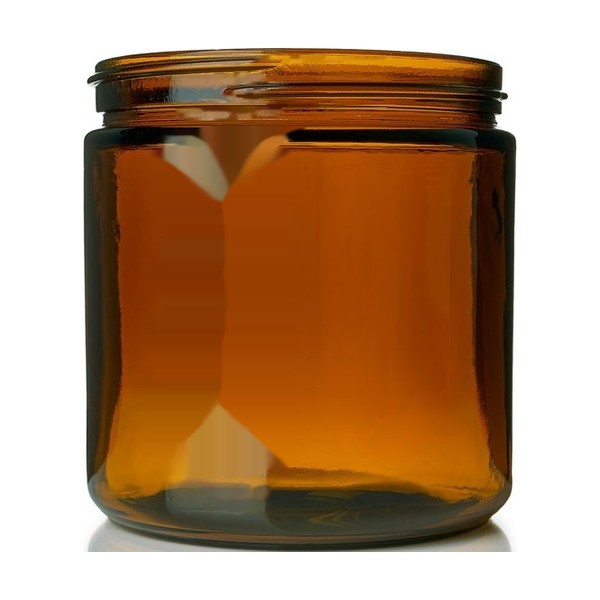 16 oz · 89-400 · Glass
 9 oz · 70-400 · Glass
 4 oz · 58-400 · Glass · Clear
 4 oz · 58-400 · Glass · Amber · 2.7 in
 6 oz · 63-400 · Glass
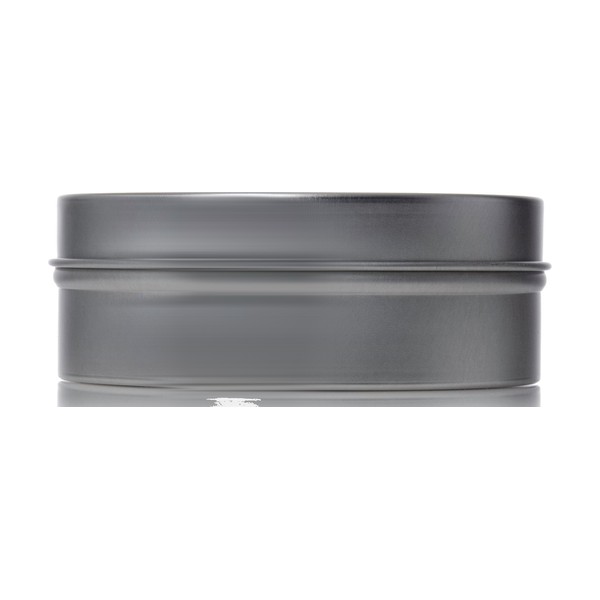 4 oz · Steel
 12 oz · 63-400 · Glass
References
- U.S. Consumer Product Safety Commission, Little Cow Company Recalls 9 oz Candles in Glass Jars Due to Fire, Burn and Laceration Hazards, recall 26-241, February 5, 2026. https://www.cpsc.gov/Recalls/2026/Little-Cow-Company-Recalls-9-oz-Candles-in-Glass-Jars-Due-to-Fire-Burn-and-Laceration-Hazards
- National Candle Association, Candle Safety Tips, modified August 12, 2025. https://candles.org/candle-safety/
- U.S. Consumer Product Safety Commission, Target Recalls 2.2 Million Threshold Candles Due to Laceration and Burn Hazards; Sold Exclusively at Target, recall 23-255, August 10, 2023. https://www.cpsc.gov/Recalls/2023/Target-Recalls-2-2-Million-Threshold-Candles-Due-to-Laceration-and-Burn-Hazards-Sold-Exclusively-at-Target
- U.S. Consumer Product Safety Commission, DEMDACO Recalls Maril Brand Scented Candles Due to Laceration and Fire Hazards, recall 25-250, May 8, 2025. https://www.cpsc.gov/Recalls/2025/DEMDACO-Recalls-Maril-Brand-Scented-Candles-Due-to-Laceration-and-Fire-Hazards
- Doug Clauson, Increasing Candle Safety, ASTM Standardization News, March/April 2013, posted July 26, 2016. https://www.astm.org/news/increasing-candle-safety-ma13
- CandleScience, Candle Wick (category page and wick recommendations), read October 22, 2026. https://www.candlescience.com/candle-wick
- CandleScience, How to Conduct a Basic Burn Test, undated, read October 22, 2026. https://candlescience.com/learning/how-to-conduct-a-burn-test/
- Kohl's, Private Brands Performance Claims Test Protocols 100, Protocol 100-Z: Candle (including freestanding, taper, tealight, votive, filled and novelty candles), revised February 2025 (current revision; candle limits unchanged from 100-Y, February 2023), read October 22, 2026. https://link.kohls.com/content/dam/klink/100-Z-CANDLE.pdf