
What changes when I hire someone to help make candles?
Updated
On this page7
You become an employer, and three sets of duties start at once. Tax: an employer identification number, payroll withholding and employment tax records kept at least four years. Insurance: workers' compensation, which is mandatory for nearly all employers in every state except Texas. Safety: OSHA's hazard communication standard, which requires a written program, a safety data sheet for every hazardous chemical you use, labels on the containers your helper pours from, and training before their first shift with fragrance oil. Hot wax adds training of your own. This page sets out each duty with its source, what it means in a candle workshop, and a first-week training plan.
Before the first day
| Duty | What it involves | Source and whom to ask |
|---|---|---|
| Employer identification number and payroll | An EIN, withholding, and records that include each employee's name, address, Social Security number, dates of employment, wage payments and Form W-4 | IRS employment tax recordkeeping [1] |
| Keeping employment tax records | At least 4 years after the tax becomes due or is paid, whichever is later | IRS [1] [2] |
| Workers' compensation | Coverage for work injuries. A Congressional Research Service overview (updated October 17, 2017) says it is "mandatory for nearly all employers" in every state except Texas, which allows employers to opt out; in four states employers must buy from a state fund [3] | Your state's workers' compensation board; the U.S. Department of Labor directs private-sector workers to their state board [4] |
| State registrations | State payroll tax and new hire reporting, which vary by state | Your state labor and revenue departments; see the checklist on do you need a license to sell candles? |
| Your liability insurance | Tell your insurer; a policy written for a sole maker may not contemplate employees | Your insurer; costs are on insurance for candle makers |
| OSHA hazard communication | Written program, SDS on hand, container labels, training | 29 CFR 1910.1200 [5]; below |
Small-employer exemptions from workers' compensation exist in some states, but the CRS overview does not list them [3], so ask your state board directly before you assume one applies. Workers' compensation pricing varies by state and payroll; MoneyGeek's August 31, 2026 survey of candle businesses prices workers' compensation on a per-employee basis [10], and insurance for candle makers reports its figures.
Hazard communication in a candle workshop
OSHA's hazard communication standard (HazCom) requires "all employers to provide information to their employees about the hazardous chemicals to which they are exposed" [5]. Many fragrance oils are hazardous chemicals under it: AFI-USA's SDS for fragrance F67142, for example, classes the oil as a skin sensitizer (Category 1), a skin and eye irritant, and hazardous to aquatic life [6]. Here is what each part of the standard means for you, paragraph by paragraph.
| Paragraph of 29 CFR 1910.1200 [5] | What it requires | In a candle workshop |
|---|---|---|
| (e)(1) Written program | A written hazard communication program at each workplace, including "A list of the hazardous chemicals known to be present using a product identifier" | A short document naming every fragrance oil, dye and cleaning solvent you use, by supplier code, and how you label, keep SDSs and train |
| (f)(6) Workplace labels | Each container of hazardous chemicals in the workplace "is labeled, tagged or marked" | Label pump jugs, decanted bottles and any container your helper pours oil from, not only the supplier's bottle |
| (g)(1) Safety data sheets | "a safety data sheet in the workplace for each hazardous chemical which they use" | An SDS for every oil, filed by supplier code |
| (g)(8) Access | SDSs "readily accessible during each work shift to employees when they are in their work area(s)" | A binder or a tablet in the pouring room, where a helper can read it without asking you |
| (h)(1) Training timing | Training "at the time of their initial assignment" and "whenever a new chemical hazard the employees have not previously been trained about is introduced" | Before the first pour, and again when you add an oil with a hazard class the helper has not met |
| (h)(3) Training content | How to detect a release, the hazards, protective measures, the details of your program, and how to read labels and SDSs | Use one of your own SDSs as the teaching example |
OSHA defines an employee for this standard as a worker who may be exposed to hazardous chemicals under normal operating conditions or in foreseeable emergencies [5]. A part-time helper who weighs oil counts. The current text on OSHA's site lists amendments through January 15, 2026 [5]; how to read each SDS section is on reading a fragrance oil safety data sheet.
Storing fragrance oil once you are an employer
OSHA's flammable liquids standard, 29 CFR 1910.106, applies to employers and sorts liquids by flash point, with oils at 200°F (93°C) and above outside its flammable liquid definition [7]. It caps container sizes and the quantities kept in cabinets and work areas for the categories below that line. Find each oil's flash point in section 9 of its SDS, then place it on the storage table, with OSHA's categories, NFPA 30 classes and the USPS shipping lines side by side, on making more candles. Your building's fire code is a separate question that your local fire marshal answers.
A first-week training plan
HazCom sets the chemical training. Hot wax, heat and fire are yours to teach. A plan that covers both:
- The workshop and its hazards. Walk through the written program, where the SDSs are, and what each label means. Read one fragrance oil SDS together, including its storage section; AFI's F67142 sheet, for example, says to keep the container tightly closed and keep cool [6].
- Protective equipment. Show what you wear for hot wax and oil and why, using the SDS's own handling section, which for F67142 says "Use personal protective equipment as required" [6]. Protecting yourself from hot wax and fragrance oil covers gloves, eye protection and clothing.
- Burns. Teach first aid before the first pour. Mayo Clinic (April 7, 2026) advises running cool water over a minor burn for about 10 minutes, removing rings or anything tight before swelling starts, not popping blisters, and avoiding butter, toothpaste or oil [8]. Call 911 or go to an emergency room for burns larger than 3 inches (about 8 cm) across, burns on the face, hands, feet, genitals, buttocks or a major joint, burns through all layers of skin, or burns that look leathery or charred [8]. If oil gets in eyes or is swallowed, follow the SDS first aid section and call Poison Control at 1-800-222-1222, which it describes as free, confidential and available 24 hours a day, or emergency services if someone has trouble breathing [11].
- Wax fires. Where the lid and the extinguisher are, and that water is never used on burning wax. What to do if wax catches fire is the procedure.
- The melter and the pour. Set temperatures from the spec, how to draw and carry hot wax, and where hot pitchers go down.
- Weighing and records. How to check the scale, weigh oil and fill the batch record as they go. A helper who records afterward breaks the traceability described on records a candle business keeps.
- Supervised batches. Pour beside them until their batches match yours on weight, temperature and finish.
Write down the date and content of each training session and have the employee initial it. HazCom requires training; a dated record is how you show it happened.
Injuries: records and reporting
If your company had 10 or fewer employees at all times during the last calendar year, OSHA's partial exemption means you do not need to keep OSHA injury and illness records unless OSHA or the Bureau of Labor Statistics tells you in writing [9]. The same section says every employer covered by the OSH Act must still report to OSHA any work-related incident that results in a fatality, the in-patient hospitalization of one or more employees, an amputation or the loss of an eye [9]. The reporting deadlines are in 29 CFR 1904.39; read it, or call OSHA, before you need it. Report any injury to your workers' compensation insurer as the policy requires.
When hiring is not the only route
A second pair of hands is one way to make more candles. Having a manufacturer pour your tested candle is another, with different costs and controls. Working with a candle manufacturer compares published minimums and lead times.
Top picks
Top containers for candles 4 oz · 58-400 · Glass · Amber · 2.6 in
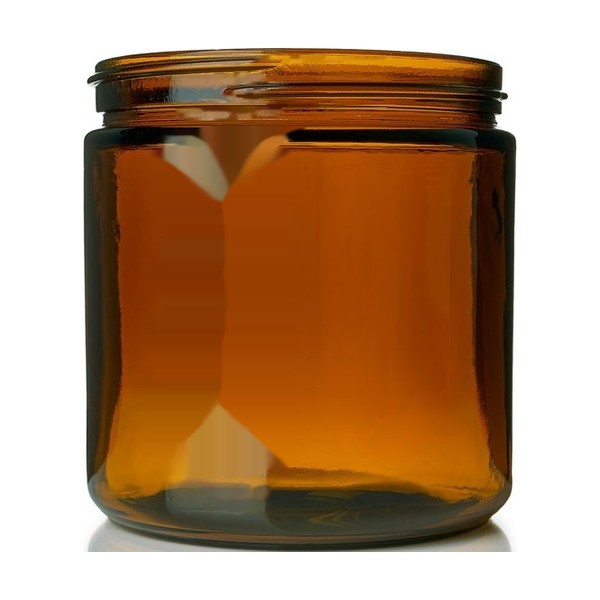 16 oz · 89-400 · Glass
 9 oz · 70-400 · Glass
 4 oz · 58-400 · Glass · Clear
 4 oz · 58-400 · Glass · Amber · 2.7 in
 6 oz · 63-400 · Glass
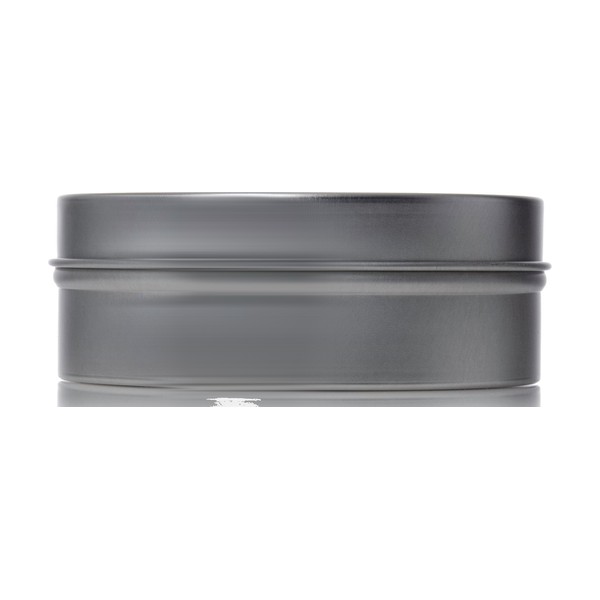 4 oz · Steel
 12 oz · 63-400 · Glass
References
- Internal Revenue Service, Employment tax recordkeeping, last reviewed or updated June 12, 2026. https://www.irs.gov/businesses/small-businesses-self-employed/employment-tax-recordkeeping
- Internal Revenue Service, How long should I keep records?, last reviewed or updated June 30, 2026. https://irs.gov/businesses/small-businesses-self-employed/how-long-should-i-keep-records
- Congressional Research Service (Scott D. Szymendera), Workers' Compensation: Overview and Issues, IF10308, updated October 17, 2017. https://www.everycrsreport.com/files/2017-10-17_IF10308_94b5d7f75c2833299a7cbd4c26c72b802f84bed9.pdf
- U.S. Department of Labor, Workers' Compensation (topic page), undated, read October 22, 2026. https://dol.gov/general/topic/workcomp
- Occupational Safety and Health Administration, 29 CFR 1910.1200, Hazard Communication, as amended through 91 FR 1696 (January 15, 2026), read October 22, 2026. https://www.osha.gov/laws-regs/regulations/standardnumber/1910/1910.1200
- AFI-USA, Safety Data Sheet F67142, issue date August 11, 2026, version 3. https://www.afi-usa.com/F2/Reports/pdf/REPORT_SDS_F67142.pdf
- Occupational Safety and Health Administration, 29 CFR 1910.106, Flammable liquids, read October 22, 2026. https://osha.gov/laws-regs/regulations/standardnumber/1910/1910.106
- Mayo Clinic, Burns: First aid, April 7, 2026. https://www.mayoclinic.org/first-aid/first-aid-burns/basics/ART-20056649
- Occupational Safety and Health Administration, 29 CFR 1904.1, Partial exemption for employers with 10 or fewer employees, read October 22, 2026. https://www.osha.gov/laws-regs/regulations/standardnumber/1904/1904.1
- MoneyGeek (Connor Bolton), How Much Does Candle Business Insurance Cost?, updated August 31, 2026. https://www.moneygeek.com/insurance/business/candle/cost
- Poison Control (National Capital Poison Center), Essential oils: Poisonous when misused, undated (© 2012-2026), read October 22, 2026. https://www.poison.org/articles/essential-oils