
Buying wax and supplies, and reading a technical data sheet
Updated
On this page7
Buy candle wax by its exact product name and number from a supplier that publishes the manufacturer's instructions for it, and keep those instructions. "Soy wax" is a category; Golden Brands GW 464 is a product with its own melt point, heating temperature, pour range, fragrance limit and cure time, and the next soy wax on the shelf can differ on every one of them. This page shows what each line on a wax technical data sheet means, using GW 464 as published by one of its sellers, what a data sheet leaves out, and how to keep track of lots so a good candle stays good.
Why the product number matters more than the wax type
Two bags labeled "soy container wax" can behave like different materials. One supplier's figures for its own soy wax do not carry over to another's, and a supplier can change what it sells under a familiar name. You can see this in a single tutorial: CandleScience's beginner soy candle instructions say they were first written with AAK (Golden Brands) 464 soy wax flakes and now use CandleScience's own SimplySoy Artisan Wax [1]. Same tutorial, same jar, different wax.
So when you buy, record three things: the manufacturer, the product name or code, and the supplier you bought it from. When you reorder, buy that same product. If the supplier substitutes something or the product name changes, treat it as a new wax and test it before you rely on it.
The same habit applies to everything that touches the burn. Wicks are sold by series and size (a CD 18 is a specific wick, not "a medium cotton wick"), fragrance oils by the supplier's own name and number, and dyes by product. Each has its own page; the point here is only that you buy all of them by name, never by category.
Reading a wax data sheet, line by line
A technical data sheet (TDS) is the manufacturer's statement of how its wax is meant to be used. Some sellers publish it as a PDF; others print the same instructions on the product page. The example below is Golden Brands GW 464 soy container wax as published on the product page of Voyageur Soap & Candle, which presents the figures as the manufacturer's recommendations. The page carries no publication date, so the figures are as read on October 22, 2026 [2].
| Field | What GW 464's seller publishes [2] | What the field tells you |
|---|---|---|
| Product | Golden Brands GW 464 Soy Container Candle Wax | The exact thing to reorder. "Container" means it is made to be poured into a jar or tin, not to stand alone as a pillar. |
| Melt point | 113 to 119°F | Where the solid wax turns liquid. It also hints at heat tolerance: a candle made from a wax that melts near 115°F can soften in a hot car or delivery truck. |
| Heating temperature | Melt to 185°F under gentle agitation | How hot to take the wax before adding dye and fragrance. This is a working temperature, well above the melt point. |
| Dye | Heat to 185°F, add dye, mix until dissolved | When in the process color goes in. |
| Fragrance addition | Remove from heat after melting to 185°F, add fragrance, stir gently for about 2 minutes | The temperature and stirring time that help the oil blend into the wax. |
| Fragrance load | A recommended maximum of about 7 to 9 percent in the instructions; about 9 percent maximum in the product details | How much oil the wax is made to hold. The sheet does not say whether the percentage is of the wax weight or of the finished candle, which matters (see below). |
| Low flash point oils | Adjust wax temperature as needed | A note for oils with a low flash point. Flash point mainly governs how oil is shipped and stored, not when you add it. |
| Pour temperature | Manufacturer's range 125 to 145°F; suggested starting point 135°F | When to pour. Pouring hotter or cooler within the range changes the finished top and how well the wax holds to the glass. |
| Cooling | Cool undisturbed at an ambient 70°F; containers about 1/2 inch apart; left open at least 24 hours | The room and spacing the manufacturer assumes. A cold room or crowded tray will not give the result the sheet describes. |
| Cure before testing | Sit undisturbed 48 hours before test burning | The minimum wait before a test burn for this wax. It is not a general rule for soy. |
| Testing | Every combination of container, wax, dye, fragrance and wick should be tested | The manufacturer's own statement that the sheet is a starting point and your candle needs its own test. |
| Wick | No model given; try a different type or size of wick if you have burn problems | The sheet will not choose your wick. That comes from the wick maker's chart and your own test. |
| Storage and shelf life | Cool, dry place away from direct heat, sunlight and moisture; minimum shelf life 3 years stored properly | How long an unopened case stays usable and how to keep it. |
Compare that with another seller's product and the numbers move. CandleScience reports adding fragrance to its coconut apricot wax at 190°F (plus or minus 5°F) and getting its best results pouring at 175°F (plus or minus 5°F), with loads tested up to 15 percent [3]. Neither set is wrong. Each is that supplier's figure for that wax, and it governs only that wax.
The two questions to ask when a sheet is unclear
First, is the fragrance percentage measured against the wax or against the whole candle? Adding 1 oz of oil to 1 lb (16 oz) of wax is 6.25 percent of the wax weight but 5.9 percent of the finished 17 oz candle. CandleScience, for example, describes its SimplySoy limit as "10% or 1.6 ounces per pound of wax," which works out as a percentage of the wax [4]. The arithmetic and the reasons it matters live on the fragrance load page.
Second, how old are these instructions? A product page without a date, like the GW 464 page above, can still be accurate, but write down the date you read it. If you download a PDF, keep the file. When a result changes months later, you will want to know whether the instructions changed too.
What the safety data sheet adds
The safety data sheet (SDS) is a separate document from the TDS. The TDS tells you how to make a candle with the wax; the SDS tells you the hazards of the material, how to store it, how to fight a fire involving it and what first aid applies. GW 464's seller links an SDS from the same product page [2]. Fragrance oils have SDSs as well, and those are usually the more important ones for a home maker because they list skin sensitizers and the oil's flash point. Reading an SDS has its own page.
Lots, and when a new one needs a confirmation burn
Wax, fragrance oil and wicks are made in lots or batches. If the bag, box or bottle carries a lot or batch code, write it down for every candle you make, next to the product number. If the package has no code, write the date you received it and ask the supplier whether they can tell you the lot.
A lot record is what lets you answer the question that comes up sooner or later: "these candles burned fine in spring; why are the new ones tunneling?" If the only thing that changed was the wax lot, you know where to look.
The GW 464 instructions say every combination of container, wax, dye, fragrance and wick should be tested [2]. A new lot of the same wax is not a new combination in name, but natural waxes vary, so treat it as a quiet change. A practical approach:
- Before you pour a full batch from a new lot of wax or a new bottle of a fragrance you already use, pour one or two candles with everything else unchanged.
- Let them cure as long as your wax's data sheet asks (48 hours for GW 464 [2]).
- Burn one beside a candle from the old lot if you still have one, and compare the melt pool, flame and smell.
- If they match, use the lot. If they do not, stop and work out what changed before pouring more.
Which changes require a full retest and which only a quick check is covered on the retesting page.
Choosing where to buy
Look for a supplier that does four things: publishes the manufacturer's instructions or TDS for each wax, links an SDS for every wax and fragrance oil, names the exact wick series and sizes it sells, and tells you when a product is discontinued or reformulated. Price per pound drops with case size; GW 464's seller lists it in 908 g, 3 kg and 20.45 kg (45 lb) packages [2], and the dated prices are on what it costs to start. Buy small until you have a candle you like, then buy that exact wax by the case.
Costs for a first kit and a first selling season are laid out on that page, and a directory of established wax, wick, fragrance and vessel suppliers, with what each one publishes, is on the suppliers page.
From a data sheet to choosing your wax
Once you can read one data sheet, you can compare several. The differences between soy, paraffin, beeswax, coconut and blends, and what each one's published figures mean in the jar, are set out on the wax types page. If you already have a bag of soy wax, how to make a soy candle walks through a first pour using one supplier's published instructions.
Top picks
Top containers for candles 4 oz · 58-400 · Glass · Amber · 2.6 in
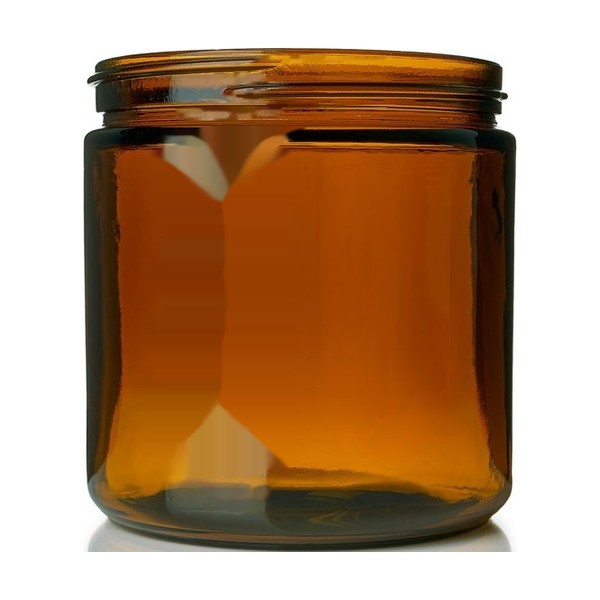 16 oz · 89-400 · Glass
 9 oz · 70-400 · Glass
 4 oz · 58-400 · Glass · Clear
 4 oz · 58-400 · Glass · Amber · 2.7 in
 6 oz · 63-400 · Glass
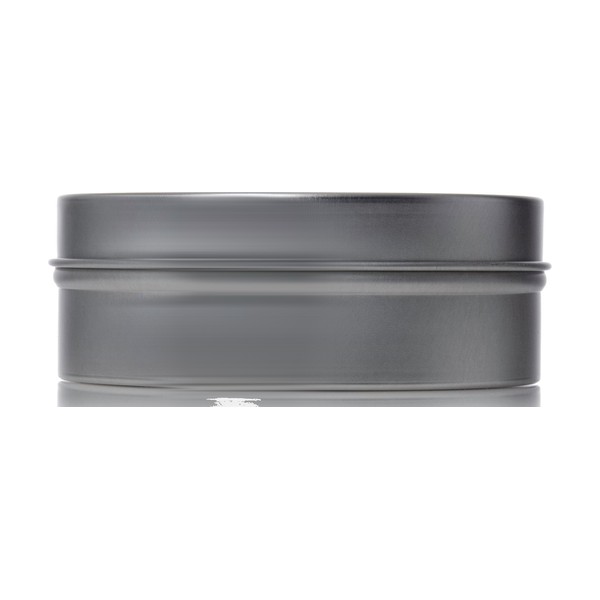 4 oz · Steel
 12 oz · 63-400 · Glass
References
- CandleScience, How to Make a Soy Candle, updated October 27, 2025. https://www.candlescience.com/learning/how-to-make-a-soy-candle
- Voyageur Soap & Candle, Golden Brands GW 464 Soy Container Candle Wax (product page with manufacturer's instructions and SDS link), undated, read October 22, 2026. https://www.voyageursoapandcandle.com/Golden_Brands_464_Soy_Wax_p/20264.htm
- CandleScience, Lab Notes: CandleScience Coconut Apricot Wax, undated (images dated April 2024), read October 22, 2026. https://candlescience.com/lab-notes-candlescience-coconut-apricot-wax
- CandleScience Support, How much fragrance oil should I add to melted wax?, updated April 30, 2026. https://support.candlescience.com/en_us/how-much-fragrance-oil-should-i-add-to-melted-wax-B15NnQAWl