
I changed a fragrance, jar or wax lot. Do I need to test again?
Updated
On this page7
Yes, in almost every case. A burn test proves one exact combination of wax, wick, fragrance oil, fragrance load, dye and vessel, and changing any one of them makes a new candle that needs its own full test. The manufacturer's instructions for Golden Brands GW 464 soy wax say it directly: "Every combination of container, wax, dye, fragrances, and wick should be tested for burn quality" [1]. A new lot of the same wax, or a new batch of the same fragrance, calls for a shorter confirmation burn rather than a full test. This page sorts the changes into those two groups and lists the ones makers most often assume are safe.
Two levels of test
A full test is the whole protocol: several wick sizes, sessions of up to four hours, hourly records, every candle burned to the end. It is described on how to burn test a candle. You run it when the candle's design has changed.
A confirmation burn is shorter. It checks that a candle built to an already tested specification still behaves as the records say. You burn one or more candles of the new batch with the established wick, record the same readings, and compare them with the original test. No supplier or retailer document cited here defines how long a confirmation burn must be, so set your own rule, write it down, and apply it every time. A sound rule is that the confirmation includes at least the sessions in which your original test was most likely to fail: the first full pool and the last sessions near the bottom.
Changes that need a full test
| What changed | Why it needs a full test | Source |
|---|---|---|
| Wick size or series | The wick is the design. Every limit was measured with the old one | GW 464 instructions [1] |
| Wax (a different product, even of the same type) | Melt behavior and viscosity change how much fuel reaches the flame. CandleScience reports its coconut apricot wax needs a smaller wick than soy because it is less viscous [2] | GW 464 [1]; CandleScience [2] |
| Wax blend ratio, or an added wax additive | A blend is a different wax. See candle wax additives | GW 464 [1] |
| Fragrance oil | Supplies for Candles says a new fragrance oil "can completely alter burn behaviour" [3] | Supplies for Candles [3]; GW 464 [1] |
| Fragrance load | Supplies for Candles says even a 1 to 2 percent change can affect performance [3]. CandleScience's wick recommendations assume 7.5 percent load and no dye [4] | Supplies for Candles [3]; CandleScience [4] |
| Dye type or amount | Dyed candles may need a larger wick than a chart suggests [4]; heavy dye may need a stronger wick [3] | CandleScience [4]; Supplies for Candles [3] |
| Vessel shape, diameter or material | Diameter sets the wick; glass, ceramic and metal heat differently and carry different temperature limits in the Kohl's protocol [5] | Kohl's [5]; GW 464 [1] |
| Fill height | A deeper fill changes where the flame sits late in the candle's life, when the vessel is hottest | See how full to fill a candle jar |
| Adding an embed, botanical, glitter or decoration | Anything in or on the wax can become a second flame. The 2026 edition of ASTM F2417 adds requirements for embed flammability and candles containing embeds, according to SGS [6] | SGS [6]; see secondary ignition |
| A coating on the vessel or the wax | F2417-26 now treats container coatings and wax coatings separately [6]; Kohl's tests coated candles with 24 samples [5] | SGS [6]; Kohl's [5] |
Changes makers often assume are safe
These are the changes that cause trouble precisely because they feel too small to matter. Treat each as a full test unless your records already cover it.
- "Same size" jar from a different supplier. Two 8 oz jars can differ in diameter, wall thickness, base shape and glass. Diameter alone can change the wick. The glass itself may be made to a different specification; see can you use any jar for a candle?.
- Same wick name from a different supplier. Wick series names and size numbers are a supplier's own labeling. Test a new source as a new wick.
- A different scent from the same fragrance house, at the same load. The fragrance oil is a different chemical mixture; see choosing and testing fragrance oils.
- A slightly darker color. More dye is a dye change [3] [4].
- Switching from unscented test candles to scented ones. Fragrance load is a variable in every wick chart [4]. A wick chosen in unscented wax is not chosen for scented wax.
- A new label or a label moved higher on the jar. Paper and adhesive near a hot rim can scorch or ignite. Burn the candle with the label you will sell.
- A lid or dust cover. A candle burned with a lid resting on the rim was never tested that way. Your instructions should say to remove it before lighting (lids, dust covers and shrink bands).
- A seasonal version in a different color jar. A dark or coated jar is a different vessel for heat and, under F2417-26, possibly for coatings [6].
New lots of the same wax or fragrance
A new lot is the same product made in a different production run. The design has not changed, so a full test is not needed. Lots can still differ, and a supplier may change a product without changing its name, so watch the revision date on the data sheet. The GW 464 instructions do not mention lot-to-lot variation [1]; the practical answer is a confirmation burn on the first batch from every new lot, with the lot number recorded so you can trace a problem back. Buying wax and supplies, and reading a data sheet explains lot numbers and what a data sheet change looks like, and keeping every batch the same covers retained samples and reformulations at production scale.
| New lot of | Test level | What to compare with the original records |
|---|---|---|
| The same wax product | Confirmation burn | Time to full pool, flame height, vessel temperature, any frosting or wet spots |
| The same fragrance oil | Confirmation burn | Smoke, flame height, cold and hot throw |
| The same wick | Confirmation burn | Flame height, mushrooming, smoke |
| The same jar | Confirmation burn, plus a visual check of the glass | Vessel temperature, any cracking |
| A product the supplier says is reformulated | Full test | Everything |
If a confirmation burn does not match the original record, stop selling that batch until you know why, and run a full test.
Changes that do not need a burn test
Some changes affect the product but not the flame: the name on the label, the box, the shipping carton, the price. They still need the right paperwork (the label rules are on what a candle label has to say), but they do not change how the candle burns as long as nothing on the vessel near the flame changes.
Lock the specification before you sell
The reason to sort changes this carefully is that a candle you sell should exist as a written specification: wax and lot, fragrance and load, dye and amount, wick, vessel and fill, each tied to the test that proved it. From a candle you like to a product you can sell shows how to write that specification, and keeping burn test records shows how to link each test to it.
Top picks
Top containers for candles 4 oz · 58-400 · Glass · Amber · 2.6 in
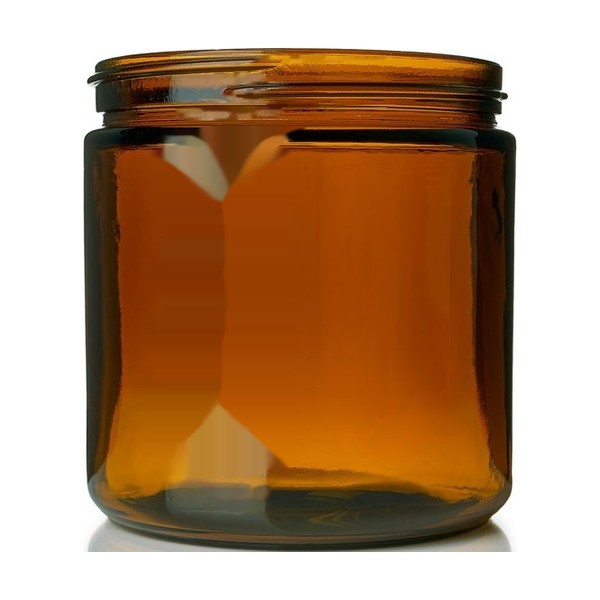 16 oz · 89-400 · Glass
 9 oz · 70-400 · Glass
 4 oz · 58-400 · Glass · Clear
 4 oz · 58-400 · Glass · Amber · 2.7 in
 6 oz · 63-400 · Glass
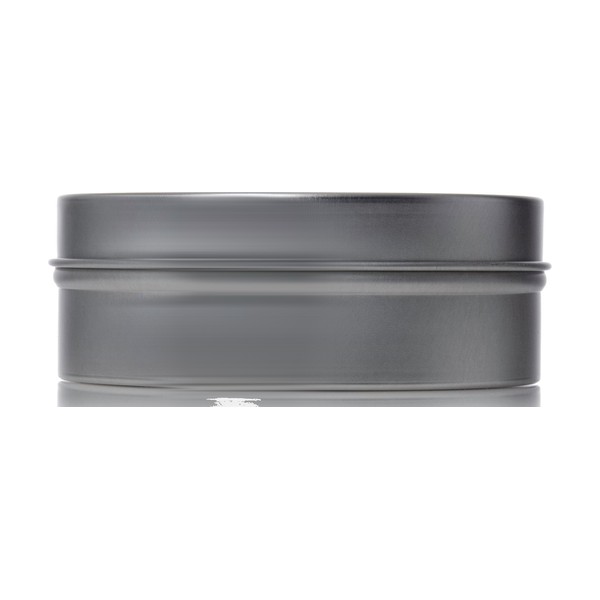 4 oz · Steel
 12 oz · 63-400 · Glass
References
- Voyageur Soap & Candle, Golden Brands GW 464 Soy Container Candle Wax (product page with manufacturer's instructions), undated, read October 22, 2026. https://www.voyageursoapandcandle.com/Golden_Brands_464_Soy_Wax_p/20264.htm
- CandleScience, Lab Notes: CandleScience Coconut Apricot Wax, undated (images dated April 2024), read October 22, 2026. https://candlescience.com/lab-notes-candlescience-coconut-apricot-wax
- Supplies for Candles, The Complete Guide to Wick Testing: What Every Candle Maker Needs to Know, published February 26, 2026, modified September 2, 2026. https://www.suppliesforcandles.co.uk/the-complete-guide-to-wick-testing-what-every-candle-maker-needs-to-know/
- CandleScience, Candle Wick (wick category page and recommendations), undated, read October 22, 2026. https://www.candlescience.com/candle-wick
- Kohl's, Private Brands Performance Claims Test Protocols 100, Protocol 100-Z: Candle (including freestanding, taper, tealight, votive, filled and novelty candles), revised February 2025 (current revision; candle limits unchanged from 100-Y, February 2023), read October 22, 2026. https://link.kohls.com/content/dam/klink/100-Z-CANDLE.pdf
- SGS, SafeGuardS: ASTM Updates Candle Fire Safety Standard, July 14, 2026. https://www.sgs.com/en/news/2026/07/safeguards-09626-astm-updates-candle-fire-safety-standard