What weight do you put on a candle label?
Updated
On this page7
Put the net weight of the candle itself, meaning the wax, fragrance, dye and wick, not the jar, lid or box, in both ounces and grams, such as "Net Wt 8 oz (227 g)." The FTC's rules under the Fair Packaging and Labeling Act say the statement gives the quantity of the product without its wrappers or anything else packed with it, require both avoirdupois and metric units, and place it in the bottom 30 percent of the front label in a minimum type size set by the label's area. Tapers and irregular molded candles may instead be declared by count and length or height. Your candles must average at least the stated weight.
What the number measures
Under 16 CFR 500.25, the net quantity statement must accurately reveal the quantity of the commodity in the container, "exclusive of wrappers and other material packed therewith" [1]. For a container candle, the jar or tin is the container, so the declared weight is what is inside it. Kohl's, as one retailer, says the same in its protocol: total wax weight, excluding container or wrappings, must be as claimed with no shortfall (-0%) [2].
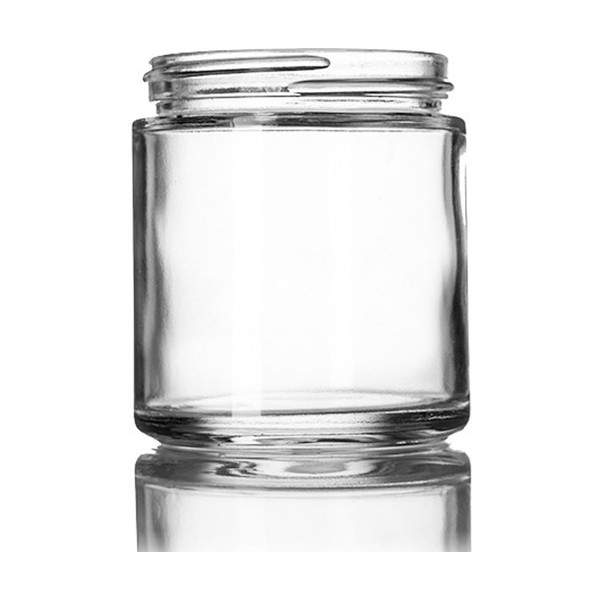
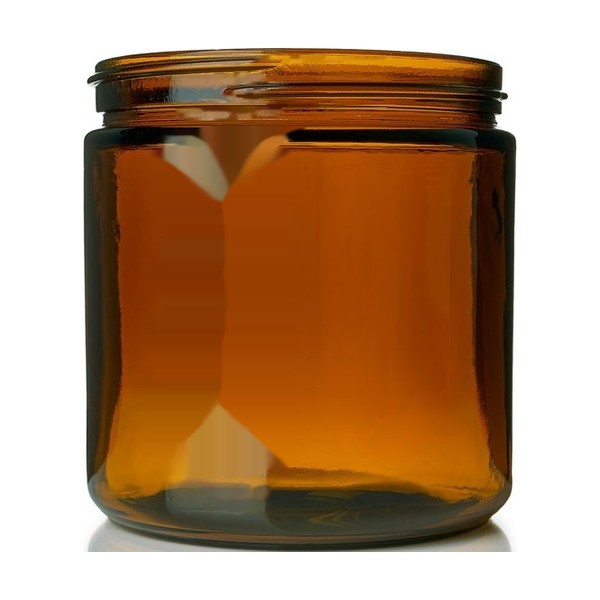
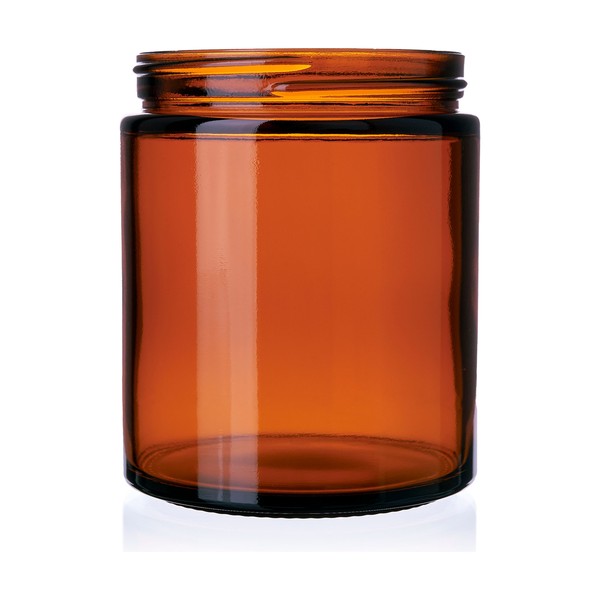
The rule asks for weight because a candle is a solid. The FTC's method of expression rule, 16 CFR 500.7, calls for fluid measure for a liquid and "weight or mass if the commodity is solid, semi-solid, or viscous," unless there is "a firmly established general consumer usage and trade custom" of declaring it another way [3]. A jar sold as "9 oz" or "8 oz" in a supplier's catalog is usually described by its fluid capacity. That number is not the candle's weight, and it does not belong on your label. How full to fill a candle jar shows how to find the actual wax weight a jar holds by test pour.
Writing it in two units
The statute requires net quantity in both the customary inch and pound system and the SI metric system, except for random weight packages [4]. The FTC's rule gives the forms [5]:
- "Net Wt 15 oz (425 g)"
- "Net Wt 1 1/2 lbs (680 g)"
- or metric first: "Net Mass 425 g (15 oz)"
To convert, multiply ounces by 28.35. An 8 oz candle is 226.8 g, written 227 g; a 6.5 oz candle is 184.3 g, written 184 g. The rule also bars qualifying words such as "jumbo," "full," "when packed" or "minimum" in the statement [6].
Tapers, pillars and other molded candles
Candles have their own short exemption. The full text of 16 CFR 501.7 reads [7]:
Tapered candles and irregularly shaped decorative candles which are either hand dipped or molded are exempt from the requirements of § 500.7 of this chapter which specifies that the net quantity of contents shall be expressed in terms of count and measure (e.g., length and diameter), to the extent that diameter of such candles need not be expressed. The requirements of § 500.7 of this chapter for these candles will be met by an expression of count and length or height in inches.
A box of hand-dipped tapers can therefore read, for example, "2 candles, 10 in" (25.4 cm). The rule itself says "inches" [7]; the FTC's units rule calls for linear measure in both inches and metric units [5], so giving both is the safer course.
The wording of 501.7 implies that the general rule for candles is count and measure, such as length and diameter [7]. Buyers often ask for everything. Kohl's requires regularly shaped candles to be labeled with count (where it applies), length or height, diameter or width, and net weight [2]. For a pillar, a label that gives all of them ("1 candle, 3 in x 6 in (7.6 cm x 15.2 cm), Net Wt 24 oz (680 g)") satisfies any reading.
| Candle | What to declare |
|---|---|
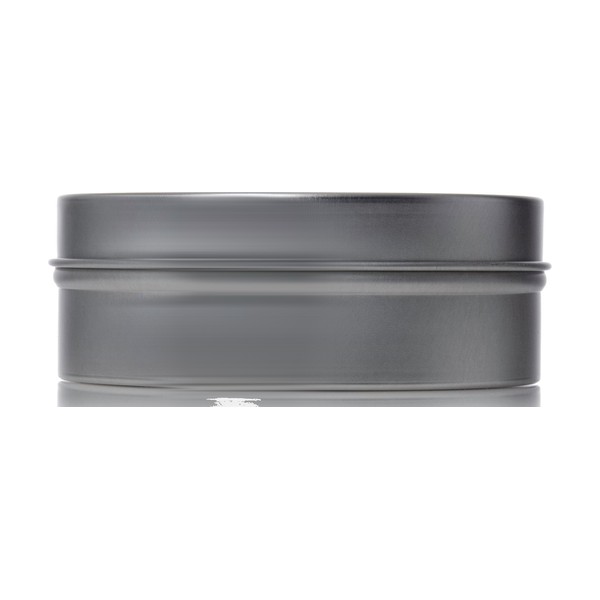
| Container candle (jar, tin, ceramic) | Net weight of the candle in oz and g [1] [5] |
| Pillar or votive sold singly | Net weight; many buyers also want count, height and diameter [2] |
| Hand-dipped or molded tapers | Count and length in inches (metric too, to be safe) [7]; add weight if a buyer asks |
| Irregular molded shape (figure, novelty) | Count and height in inches [7] |
| Multipacks | Number of units, quantity per unit, and total; Kohl's lists these for multiunit candle packages [2] |
Where it goes and how big it must be
The declaration goes on the principal display panel, within the bottom 30 percent of the label panel's area, in lines generally parallel to the base [6]. It must be separated from text above and below by at least the height of its own lettering, and from text to the left or right by at least twice the width of the letter "N" in its type [6]. Panels of 5 square inches or less are exempt from the bottom 30 percent rule [6].
Type size depends on the area of the principal display panel. For a cylindrical container, that area is 40 percent of the container's height multiplied by its circumference, leaving out shoulders and necks [8]. The minimum heights are [8]:
| Area of principal display panel | Minimum type height for net quantity |
|---|---|
| 5 sq in (32.2 cm²) or less | 1/16 in (1.5 mm) |
| More than 5, up to 25 sq in (161 cm²) | 1/8 in (3.1 mm) |
| More than 25, up to 100 sq in (6.45 dm²) | 3/16 in (4.7 mm) |
| More than 100 sq in | 1/4 in (6.35 mm), or 1/2 in (12.7 mm) above 400 sq in |
Worked examples
These use the rule's cylinder formula [8]; the jar dimensions are examples.
| Jar | Circumference (π x diameter) | Height of body | 40% of height x circumference | Minimum type |
|---|---|---|---|---|
| 3 in diameter, 3.5 in body | 9.42 in | 3.5 in | 13.2 sq in | 1/8 in (3.1 mm) |
| 4 in diameter, 4 in body | 12.57 in | 4 in | 20.1 sq in | 1/8 in (3.1 mm) |
| 5 in diameter, 5 in body | 15.71 in | 5 in | 31.4 sq in | 3/16 in (4.7 mm) |
The type must be uniform for all packages of substantially the same size [8]. Measure the body height without the shoulder or neck. If your front label is small and the jar is large, the type size still follows the container's panel area.
Checking your fills against the label
The rule allows for small differences, within limits. Variations from unavoidable deviations in weighing, measuring or counting that occur in good packaging practice are permitted, but the average of a shipment may not fall below the stated quantity, and an unreasonable shortage in any single package is not excused by overages in others in the same shipment [1]. Variations from ordinary exposure in distribution after the product enters commerce are also permitted [1]. Kohl's goes further and allows no shortfall (-0%) [2].
A simple check for each batch:
- Before pouring, weigh each empty jar with its wick and wick tab attached, and write the tare on the jar bottom or in your batch record.
- After the candle has set, weigh it again. Gross weight minus tare is the net weight.
- Weigh every candle in a small batch, or a sample spread through a larger one. Weighing wax and fragrance covers scale resolution.
- Calculate the average and note the lowest single candle.
- If the average is below the label, or any candle is well below it, top up, relabel with a lower figure, or hold the batch.
- Record the results with the batch number; keeping every batch the same covers batch records at volume.
Choose a declared weight your process meets on average with room to spare, and set your fill weight from the measured jar, not from the jar's catalog capacity. The arithmetic for how many candles a batch makes is on the wax and batch calculator.
These are the FTC's net quantity rules as of October 2026. Your state weights and measures program enforces them in stores and can answer questions about your own labels.
Finding the weight your jar actually holds
The declared weight starts with a measured fill. How full to fill a candle jar, and how much wax it holds shows the test pour that gives you that number.
References
- 16 CFR 500.25, Net quantity, average quantity, permitted variations (Legal Information Institute, Cornell Law School), read October 22, 2026. https://www.law.cornell.edu/cfr/text/16/500.25
- Kohl's, Private Brands Performance Claims Test Protocols 100, Protocol 100-Z: Candle (including freestanding, taper, tealight, votive, filled and novelty candles), revised February 2025 (candle limits unchanged from 100-Y, February 2023; adds a Hardlines Regulatory Supplement). https://link.kohls.com/content/dam/klink/100-Z-CANDLE.pdf
- 16 CFR 500.7, Net quantity of contents, method of expression (Legal Information Institute, Cornell Law School), read October 22, 2026. https://www.law.cornell.edu/cfr/text/16/500.7
- 15 U.S.C. 1453, Requirement of label (Fair Packaging and Labeling Act) (Legal Information Institute, Cornell Law School), read October 22, 2026. https://www.law.cornell.edu/uscode/text/15/1453
- 16 CFR 500.8, Units of weight or mass and measure (Legal Information Institute, Cornell Law School), read October 22, 2026. https://www.law.cornell.edu/cfr/text/16/500.8
- 16 CFR 500.6, Net quantity of contents declaration, location (Legal Information Institute, Cornell Law School), read October 22, 2026. https://www.law.cornell.edu/cfr/text/16/500.6
- 16 CFR 501.7, Candles (Legal Information Institute, Cornell Law School), 36 FR 5690, March 26, 1971, read October 22, 2026; quoted text re-checked word for word on October 22, 2026 against the eCFR reproduction on CustomsMobile (regulations last checked for updates October 22, 2026). https://www.law.cornell.edu/cfr/text/16/501.7
- 16 CFR 500.21, Type size in relationship to the area of the principal display panel (Legal Information Institute, Cornell Law School), read October 22, 2026. https://www.law.cornell.edu/cfr/text/16/500.21