Should your candle go in glass, tin, ceramic or concrete?
Updated
On this page8
Glass is the most tested choice: it is the only container material with its own ASTM candle specification (F2179), and you can watch the melt pool through it. Tins are light, unbreakable in shipping and run hotter on the outside, which is why the one published retailer limit for metal is lower than for glass. Ceramic and concrete look handmade and hide the wax, but no candle standard covers them, so all of the evidence about them has to come from your own burn tests. This page compares the four by heat behavior, how each fails, what each asks of testing, and where each makes sense.
The four materials side by side
| Glass | Tin and other metal | Ceramic | Concrete and cement | |
|---|---|---|---|---|
| Candle standard for the vessel | ASTM F2179 for annealed glass filled candle containers [1] | None among the six ASTM standards CPSC lists [2] | None [2] | None [2] |
| One retailer's outside surface limit (Kohl's) | 175°F (79°C) [7] | 140°F (60°C) [7] | 175°F (79°C) [7] | Not listed; Kohl's names only metal, ceramic and glass [7] |
| How heat moves | Slowly; hot near the pool, cooler below | Quickly to the whole outside wall and base | Slowly, but a thick wall stores heat | Slowly; thick walls store heat |
| How it fails | Cracks or breaks, sometimes suddenly [3] [4] [5] | Hot to touch; scorches a surface underneath; seam or coating problems | Cracks, especially through glaze flaws; can heat a table through an unglazed base | Cracks; may absorb oil or water if unsealed |
| Can you see the melt pool and wax level? | Yes | No | No | No |
| Shipping | Breakable, needs packing | Light and does not break | Breakable and heavy | Heavy; edges chip |
| Measuring its temperature | Contact probe or infrared | Contact probe; infrared reads low on shiny metal [6] | Contact probe or infrared | Contact probe or infrared |
Kohl's figures are from its Test Protocol 100-Z (February 2025), the current revision, which keeps the limits of the earlier 100-Y; it is one buyer's protocol, built on F2417-17, and no legal standard [7]. The ASTM scope pages cited here give no numeric container temperature limit, which is why Kohl's figures are the ones used here.
Glass
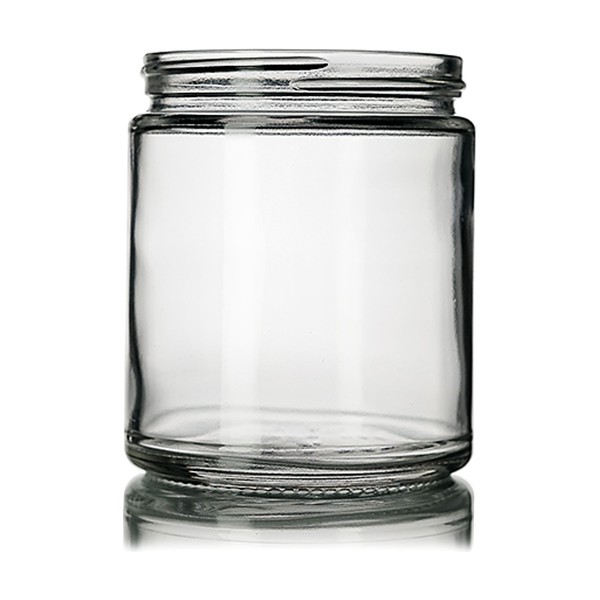
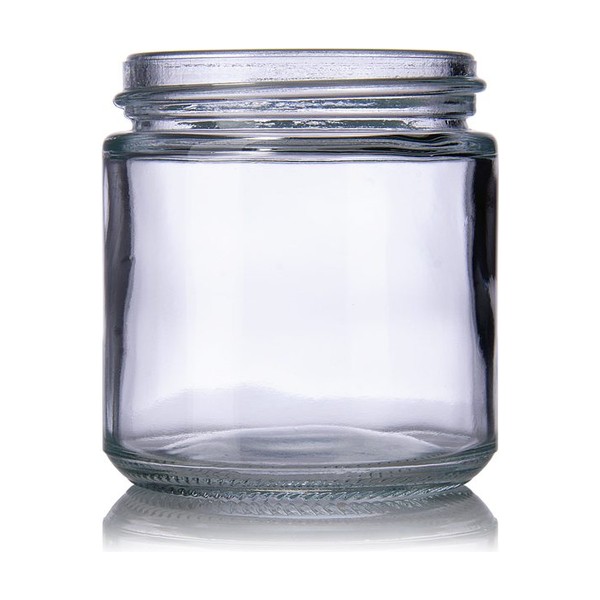
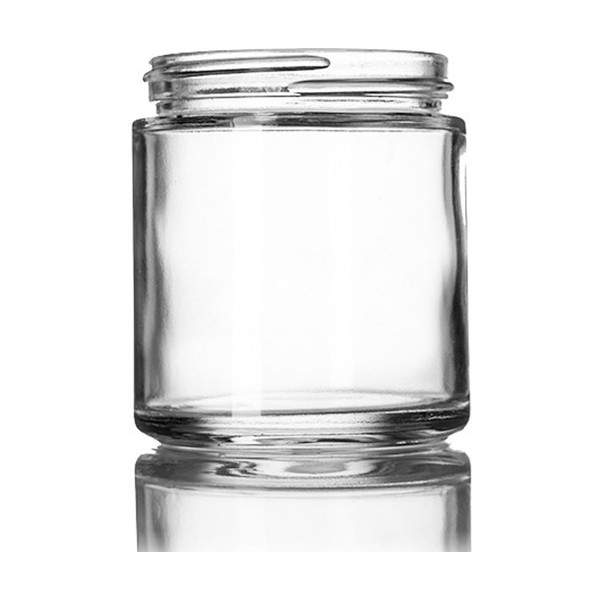
Glass is what most container candles are sold in, and the reasons are practical as much as visual. It is the only one of the four with a specification written for candle use: ASTM F2179 covers annealing, thermal shock and scratch testing for glass containers produced for filled candles [1]. You can see tunneling, wick drift and the wax level through it during a test, which makes testing faster and more honest. Customers can see when to stop burning.
Its failure mode is the serious one: a jar that cracks or breaks while lit. CPSC has announced recalls for exactly that, from about 1,140 units of a 9 oz soy candle (February 2026) to about 2.2 million units of a national retailer's candles (August 2023) [3] [5]. What separates a candle glass from a drinking glass, and what to ask a supplier, is on can you use any jar for a candle?.
Glass shows wet spots, the patches where wax has pulled away from the wall. They are cosmetic, and a tin, ceramic or concrete vessel hides them. See wet spots on glass candles.
Tins and other metal
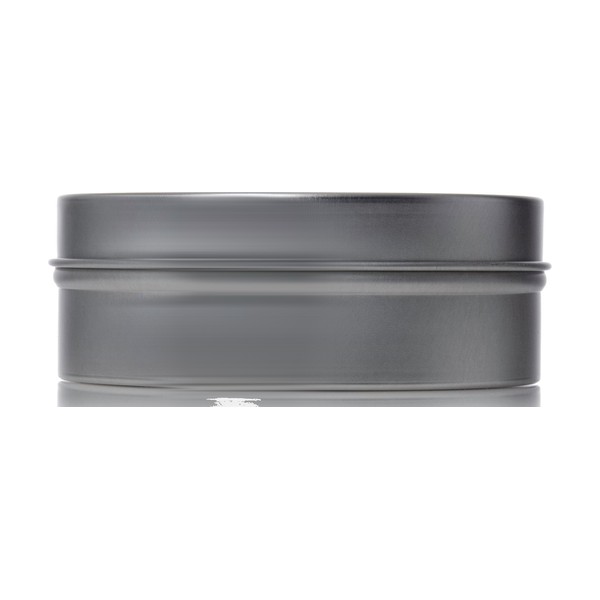
A tin cannot shatter, which is why tins suit travel candles, shipping and outdoor use. What it trades for that is heat at the surface. Metal carries heat from the melt pool to the whole outside wall and the base, where a hand or a tabletop touches it directly. Kohl's sets its metal limit 35°F lower than its glass and ceramic limit, 140°F (60°C) against 175°F (79°C) [7].
Two things make a tin easy to get wrong in testing:
- Infrared thermometers read shiny metal low. Fluke, a test instrument maker, explains that polished metal has low emissivity and can make an infrared reading under-report the true temperature; it suggests a patch of non-reflective tape or flat paint, or a contact probe [6]. A tin that reads comfortably cool by infrared may be over a limit.
- The base matters as much as the wall. A tin sitting on a wooden shelf or a plastic tray transfers heat downward. Measure the base at the end of the last sessions, and test on the kind of surface a customer is likely to use.
Ask the tin supplier what the tin is made of, whether it has a seam, and whether it carries an inside lining or coating, and what the maker says about using it for a filled candle. None of the CPSC standards covers metal candle containers [2], so a tin maker's own published data, where it exists, is the only vessel-specific information you will have. Lids for tins are covered on lids, dust covers and shrink bands.
Ceramic
Ceramic gives an opaque, crafted look and holds heat well. Kohl's treats it with glass, at 175°F (79°C) for the outside surface [7]. There is no ceramic candle container standard [2], so the questions F2179 answers for glass have to be answered by your testing and by the maker of the vessel.
Points to check with a ceramic vessel:
- Glaze inside. A crazed or pinholed glaze lets oil reach the clay body. Inspect the inside under a light before you pour.
- Wall thickness. A thick wall stores heat and stays hot after the flame is out. Record the temperature after extinguishing as well as during the burn.
- The foot. An unglazed base sitting on a table is the hottest contact point late in a burn. Measure it.
- Handmade pieces vary. If a potter makes your vessels, wall thickness and glaze change from piece to piece. Burn test more than one, and keep the potter's batch with your candle batch record.
Concrete and cement
Concrete vessels are popular for their look, and many makers cast their own. No published candle standard or retailer limit names concrete [2] [7], and no concrete vessel maker's heat data is cited here. Concrete may perform well, but your own tests are the only evidence you will have. Things to settle in testing before you sell:
- Whether fragrance oil or wax seeps into the wall. Look for dark patches on the outside after a cure and after several burns.
- Whether it cracks. Inspect after every session, including hairline cracks at the base and around the rim.
- Whether the outside gets hot. Use the 175°F glass and ceramic figure as a working target if you have no better one, and say in your records that you chose it.
- Whether a sealant or coating inside the vessel burns or softens. A coating on a candle container is now a defined term in the 2026 edition of ASTM F2417, according to SGS's summary [8]; if you seal the inside, treat the sealant as part of the build and retest when it changes.
- Whether dust or loose aggregate falls into the wax. Debris in the pool is a wick and secondary ignition problem.
If you cast vessels yourself, every mix, cure and sealant change is a new vessel for testing purposes.
Choosing by how the candle will be used and sold
| If your candle will mostly be | Material that usually fits | What to watch |
|---|---|---|
| Sold at markets and in shops, displayed lit or unlit | Glass | Use jars made for candles; test to the end |
| Shipped by mail in volume | Tin, or glass with good packing | Tin surface temperature; see shipping candles |
| Used outdoors or for travel | Tin | Hot base on outdoor tables; wind raises flame |
| Sold as a decor piece meant to be reused after the candle | Ceramic or concrete | Every piece is a test variable; customers will refill it |
| Sold to a retailer with a vendor test protocol | Whatever the buyer's protocol and your test data support | The buyer's own limits, which may differ from Kohl's |
Whichever you choose, the vessel's diameter sets your wick, and changing material counts as changing the vessel. GW 464's instructions say every combination of container, wax, dye, fragrance and wick should be tested [9]. What has to be retested lists the rest.
Once you have picked a material
The next decisions are the size of the vessel and how much wax it holds. Choosing a candle jar size covers diameter, wick and burn time, and how hot the jar gets shows how to take the temperature readings this page relies on.
References
- ASTM International, ASTM F2179-26 Standard Specification for Annealed Glass Containers That Are Produced for Use as Candle Containers (store page, scope), last updated May 28, 2026. https://store.astm.org/f2179-26.html
- U.S. Consumer Product Safety Commission, Candles Business Guidance, undated, read October 22, 2026. https://www.cpsc.gov/Business--Manufacturing/Business-Education/Business-Guidance/Candles
- U.S. Consumer Product Safety Commission, Little Cow Company Recalls 9 oz Candles in Glass Jars Due to Fire, Burn and Laceration Hazards, recall 26-241, February 5, 2026. https://www.cpsc.gov/Recalls/2026/Little-Cow-Company-Recalls-9-oz-Candles-in-Glass-Jars-Due-to-Fire-Burn-and-Laceration-Hazards
- U.S. Consumer Product Safety Commission, DEMDACO Recalls Maril Brand Scented Candles Due to Laceration and Fire Hazards, recall 25-250, May 8, 2025. https://www.cpsc.gov/Recalls/2025/DEMDACO-Recalls-Maril-Brand-Scented-Candles-Due-to-Laceration-and-Fire-Hazards
- U.S. Consumer Product Safety Commission, Target Recalls 2.2 Million Threshold Candles Due to Laceration and Burn Hazards, recall 23-255, August 10, 2023. https://www.cpsc.gov/Recalls/2023/Target-Recalls-2-2-Million-Threshold-Candles-Due-to-Laceration-and-Burn-Hazards-Sold-Exclusively-at-Target
- Fluke, How to Get Great Results with an Infrared Thermometer, undated, read October 22, 2026. https://www.fluke.com/en-us/learn/blog/temperature/how-to-get-great-results-with-an-infrared-thermometer
- Kohl's, Private Brands Performance Claims Test Protocols 100, Protocol 100-Z: Candle (including freestanding, taper, tealight, votive, filled and novelty candles), revised February 2025 (current revision; candle limits unchanged from 100-Y, February 2023), read October 22, 2026. https://link.kohls.com/content/dam/klink/100-Z-CANDLE.pdf
- SGS, ASTM Updates Candle Fire Safety Standard (SafeGuardS 096/26), July 14, 2026. https://www.sgs.com/en/news/2026/07/safeguards-09626-astm-updates-candle-fire-safety-standard
- Voyageur Soap & Candle, Golden Brands GW 464 Soy Container Candle Wax (product page with manufacturer's instructions), undated, read October 22, 2026. https://www.voyageursoapandcandle.com/Golden_Brands_464_Soy_Wax_p/20264.htm