Is a candle warning label required, and what does it say?
Updated
On this page8
Federal law does not require one, but almost every buyer, insurer and serious maker treats it as required. The warning comes from ASTM F2058, the voluntary candle fire safety labeling standard that CPSC lists. Its text-only version is a safety alert symbol, the signal word "WARNING," and three statements: burn within sight, keep away from things that can catch fire, keep away from children. It belongs on the unit of sale, where a shopper can see it at the point of sale. This page gives the wording as one published retailer protocol prints it, the pictogram alternative, where to put it on jars, tins and boxes, and why to use it from your first sale.
What federal law requires, and what buyers require
No federal rule requires a candle warning label. CPSC lists ASTM F2058, Standard Specification for Candle Fire Safety Labeling, among the voluntary standards it follows for candles [1]. The current edition is F2058-07(2021), which the ASTM store lists as active [2].
It becomes required in practice through buyers. Kohl's Test Protocol 100-Z (February 2025) requires the candle, or the candle with its container or package, to carry a label meeting ASTM F2058, and references the F2058-07 (R2014) edition [3]. That is one retailer's buyer requirement, never a legal standard.
Separate from F2058, a candle that contains a hazardous substance under the Federal Hazardous Substances Act must carry cautionary labeling by law [1]. That is a different label with different required elements; see which laws apply to candles.
The wording
ASTM's scope summary for F2058 describes a warning with a safety alert symbol, in either a text-only version with the signal word "WARNING" or a text and pictogram version [2]. The standard's own text is sold by ASTM and is not reproduced here. What follows is the text-only wording as Kohl's protocol prints it for its vendors [3]:
[safety alert symbol] WARNING Burn within sight. Keep away from things that can catch fire. Keep away from children.
The safety alert symbol is a triangle with an exclamation point inside it. Kohl's lists the symbol with the text-only version [3].
Kohl's 100-Z also lists the line "Do not burn more than 2 hours at one time" among its candle labeling items [3]. Treat it as Kohl's requirement for the candles it buys: it sits outside the three F2058 statements above, and no federal rule asks for it. If you sell to Kohl's, print it; if not, use the burn time your own testing supports (burn instructions to give customers).
Two published summaries describe the third theme more broadly. ASTM's magazine says the F2058 warnings tell consumers to keep candles away from children and pets [4], and the National Candle Association summarizes the standard's three cautions as burning within sight, keeping candles away from things that can catch fire, and keeping candles out of children's reach [5]. If you add "and pets," you are within what these summaries describe; if a buyer specifies exact wording, use theirs. Before you print a large run, buy the current edition from ASTM and check your label against its text.
Text only or pictograms
| Text-only version | Text and pictogram version | |
|---|---|---|
| What it uses | Safety alert symbol, "WARNING," the three statements [2] [3] | Safety alert symbol with pictograms for each caution [2] |
| Space needed | Three short lines; fits a jar bottom or back label | Needs room for the pictograms to be legible |
| When to choose it | Most small labels, single-language markets | Multilingual markets, or where a buyer asks for pictograms |
| Source of the artwork | Your own typesetting | The pictograms are defined in the standard; buy it, or use artwork your label printer supplies and confirm it against the standard |
Many makers add burn instructions under the warning, such as trimming the wick and stopping before the bottom. Those are care instructions that sit outside the F2058 warning; keep them visually separate. Burn instructions to give customers gives sourced wording.
Where it goes
ASTM's scope summary says the warning must be on the unit of sale, visible at the point of sale, and not covered, obstructed or removed [2]. Kohl's allows it on the candle, or on the candle and its container or package [3].
| Candle and packaging | Where to put the warning |
|---|---|
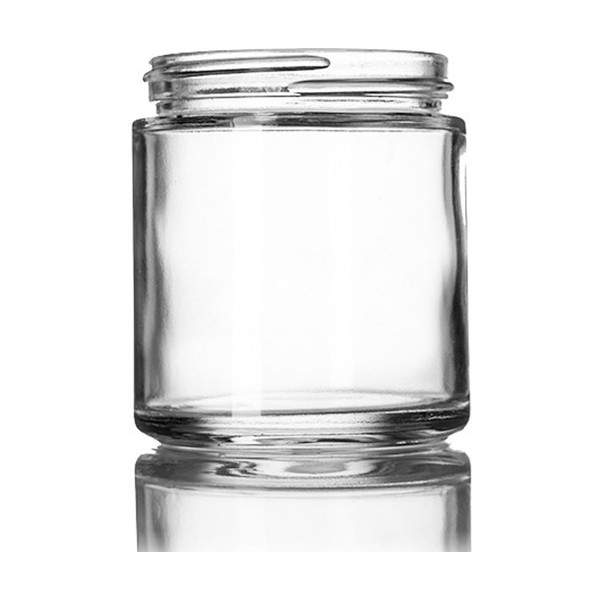
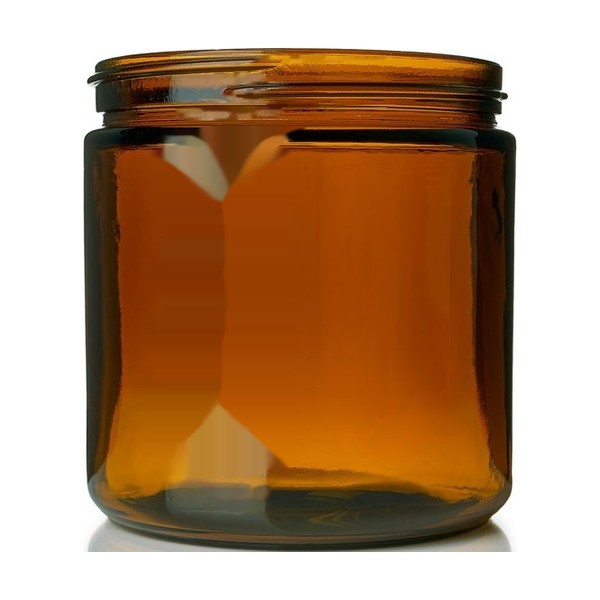
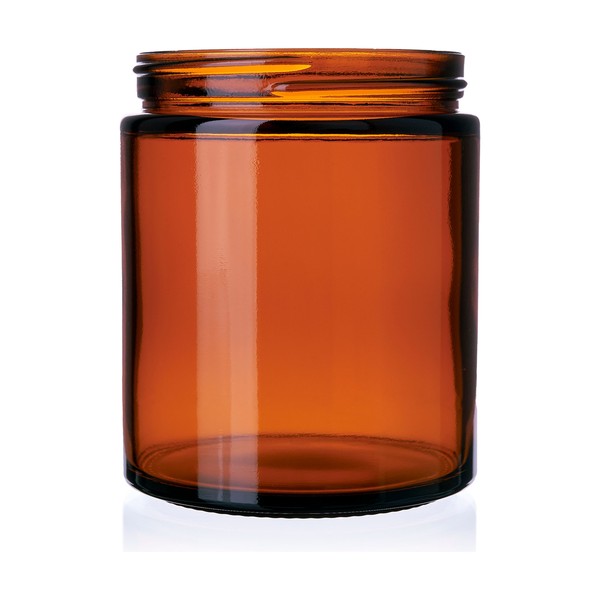
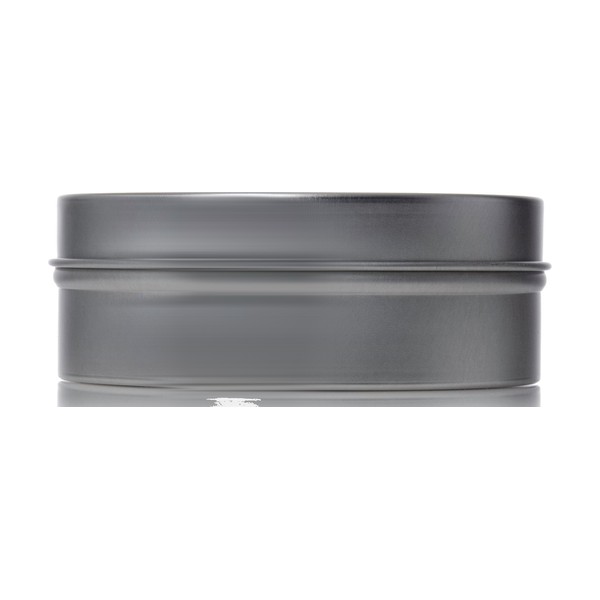
| Jar or tin candle, no box | On the jar or tin label, front, back or bottom, where a shopper can see it before buying [2] |
| Jar candle in a gift box | On the box, since the box is what the shopper sees [2]; also on the jar, because the box is usually thrown away before the candle is burned |
| Pillar or taper with a wrap or band | On the wrap or band [2]; a pillar's bottom sticker also helps once the wrap is gone |
| Shrink-wrapped candle | On the candle or a label under clear film, so the film does not obstruct it [2] |
| Multipacks of tealights or votives | On the outer pack, visible at sale [2] |
| Candle sold unpackaged at a market | On a label on the candle itself, or a hang tag that stays with it |
Labels on hot containers can lift or char. Labels that stay on a candle covers label stock and placement away from the hottest part of the vessel.
Why use it from the first candle
- It addresses the leading causes of candle fires. ASTM's magazine ties the F15.45 standards to the most common causes of candle fires, including excessive flame height and secondary ignition, and describes F2058's warnings as telling consumers to keep burning candles within sight and away from flammable items and from children and pets [4].
- Every buyer who sets standards will ask for it [3], and printing it from the start avoids relabeling stock.
- Insurers and shops ask what standards you follow. A warning that matches F2058 is the easiest one to show.
- It is cheap. Three lines on a label you are already printing.
What this warning does not replace
- The lead wick carton statement, which applies only to metal-cored wicks and goes on outer shipping cartons; see lead in wicks.
- FHSA cautionary labeling, if your candle contains a hazardous substance [1].
- A Prop 65 warning, if your business has 10 or more employees and the candle exposes Californians to a listed chemical; see state rules.
- Minimum-risk pesticide label elements for a citronella candle with a repellent claim; see citronella and bug candles.
Everything above comes from ASTM's published scope, one retailer protocol and trade association summaries, as of October 2026. Buy F2058 from ASTM before relying on its exact requirements.
What to print beneath the warning
The warning tells customers what never to do; burn instructions tell them how to get a clean, full burn. Burn instructions to give customers gives a sourced set you can adapt.
References
- U.S. Consumer Product Safety Commission, Candles Business Guidance, undated, read October 22, 2026. https://www.cpsc.gov/Business--Manufacturing/Business-Education/Business-Guidance/Candles
- ASTM International, ASTM F2058-07(2021) Standard Specification for Candle Fire Safety Labeling (store scope page), last updated May 24, 2022. https://store.astm.org/f2058-07r21.html
- Kohl's, Private Brands Performance Claims Test Protocols 100, Protocol 100-Z: Candle (including freestanding, taper, tealight, votive, filled and novelty candles), revised February 2025 (candle limits unchanged from 100-Y, February 2023; adds a Hardlines Regulatory Supplement). https://link.kohls.com/content/dam/klink/100-Z-CANDLE.pdf
- Doug Clauson, Increasing Candle Safety, ASTM Standardization News, March/April 2013 (posted July 26, 2016). https://www.astm.org/news/increasing-candle-safety-ma13
- National Candle Association, Understanding Safety Standards, modified July 6, 2026. https://candles.org/?p=593