
How do you sell candles on Etsy or your own website?
Updated
On this page8
Selling candles online means pricing for the platform's fees and the cost of shipping glass, writing listings that answer the questions a buyer would ask at a booth, and treating everything you write online as labeling. On Etsy, a U.S. seller pays $0.20 to list an item for four months, a 6.5 percent transaction fee on the item price plus shipping and gift wrap, and payment processing of 3 percent plus $0.25, with Offsite Ads fees of 12 or 15 percent on sales those ads bring in (Etsy, policy updated October 5, 2026). Your own site swaps those fees for a payment processor's and the work of bringing buyers to you.
Etsy's fees for U.S. sellers
| Fee | Amount | What it applies to | Source |
|---|---|---|---|
| Listing | $0.20 per item listed | Charged when you list, sold or not; listings expire after four months and auto-renew for another $0.20 unless you set renewal to manual | Fees & Payments Policy [1] |
| Transaction | 6.5% | "the price you display for each listing," plus the shipping and gift wrap you charge; personalization fees count as part of the price; not charged on U.S. sales tax | [1] |
| Payment processing | 3% + $0.25 | Shown for U.S. sellers on Etsy's selling page; the policy says rates vary with the location of your bank account | [2][1] |
| Offsite Ads | 15% of an attributed order, or 12% for shops with $10,000 or more in sales in the prior 365 days | Only orders Etsy attributes to its ads; capped at $100 per order; shops under $10,000 can opt out | [1] |
| Currency conversion | 2.5% | Only when your listing currency differs from your payment account's | [2] |
| Etsy Plus (optional) | $10 a month | Includes listing credits and Etsy Ads credits | [1] |
Fees change. Read Etsy's policy on the day you set prices, and date your own price sheet.
What the fees do to one sale
Example figures, not a recommended price: a candle listed at $28.00, with $6.00 shipping charged.
| Line | Amount |
|---|---|
| Transaction fee, 6.5% of $34.00 | $2.21 |
| Listing fee | $0.20 |
| Payment processing, 3% + $0.25 on $34.00 | about $1.27 |
| Total before any Offsite Ads fee | about $3.68 |
| If the order is attributed to Offsite Ads (15%) | a further 15% of the attributed order, up to $100 |
That is about 13 percent of the candle's price without ads, and much more on an ad-attributed order. Build it into the price, as how to price a candle shows. Because the transaction fee also applies to the shipping you charge, under-charging for shipping costs you twice: once at the post office and again in fees.
Your own website
A shop on your own site trades marketplace fees for other costs: the platform's subscription, a payment processor's fee on every card sale, and whatever you spend bringing people to the site. Processors publish their own rates; read them when you choose one. Two practical differences matter for candles:
- You own the customer. Repeat buyers can reorder their scent from you directly, which matters for a product people burn through.
- You carry the checkout rules. Sales tax collection, shipping zones and what you will not ship (fragrance oil, for example) are your settings to get right.
You can run both: Etsy for discovery, your own site for repeat customers.
Putting shipping into the price
A candle in glass is heavy and fragile, so shipping can be a large share of what the buyer pays. Measure it rather than guessing.
- Pack one candle of each size exactly as you will ship it: box, cushioning, care card.
- Weigh it and measure the box.
- Price it with your carrier's calculator to the farthest zone you will ship to and to a nearby one.
- Decide whether to charge actual shipping, a flat rate, or free shipping built into the price. Whichever you choose, the money has to come from somewhere; Etsy's 6.5 percent applies to shipping charged as well [1].
- Recheck when carriers change rates.
Shipping candles without breakage or melting covers packing glass and heat in transit.
Listings that answer the buyer's questions
At a booth, people pick up the candle, read the label and smell it. Online, the listing does all three. Include:
| Put in the listing | Why |
|---|---|
| Net weight in ounces and grams | The same figure as the label; the jar's fluid ounce size is not the candle's weight (stating net weight on a candle) |
| Vessel size and material, with dimensions | Buyers compare by size, and glass, tin and ceramic look different in a room |
| Wax, named truthfully | "Soy wax" and "soy blend" mean different things; see the claims page below |
| Wick type | Some buyers look for cotton or wood wicks |
| Burn time you measured | Only if you burned the candle to the end in testing |
| Scent notes in plain words | Describe the smell; do not name another company's product |
| Care instructions and the warning | The same information that goes on the label and care card (burn instructions to give customers) |
Photos. Show the candle lit and unlit, the label close enough to read, the candle next to an everyday object for scale, and the lid if there is one. A photo of the melt pool from your own test burn shows something a styled picture cannot: that the candle burns edge to edge.
Claims online count as labeling
Everything you write in a listing, on your site or in a social post is part of how regulators judge what your product is.
- Health and mood claims. FDA says a product's intended use can be established by "Claims stated on the product labeling, in advertising, on the Internet, or in other promotional materials" [3]. A listing that says a candle helps you sleep or relieves anxiety makes the same drug claim a label would.
- Pest claims. For products sold as minimum risk pesticides, EPA says website and advertising materials are held to the same rule against false or misleading statements as the label [4]. A citronella candle described online as keeping mosquitoes away is making a pesticide claim (citronella and bug candles).
- Natural, clean and non-toxic. The FTC's rules on environmental and "free of" claims apply online as much as on the jar.
What you may and may not say, word by word, is on what you can claim about your candle. If you sell to California customers, state rules may also reach you (state rules that apply to candles).
Selling more than candles online
Wax melts ship like candles. Fragrance oil, reed diffuser bases and room sprays are liquids, and USPS Publication 52 regulates them by flash point: a liquid at 140°F (60°C) or below is flammable and barred from domestic air, and one above 140°F and below 200°F is combustible and can fly only under conditions [5]. The class table is on shipping candles without breakage or melting, and what a fragrance oil's flash point means explains the number itself. Read both before you list any liquid.
Getting the order to the door
Once the listing is live and priced, the remaining risk is the box. Shipping candles without breakage or melting covers packing, heat and what the carrier rules say.
Top picks
Top containers for candles 4 oz · 58-400 · Glass · Amber · 2.6 in
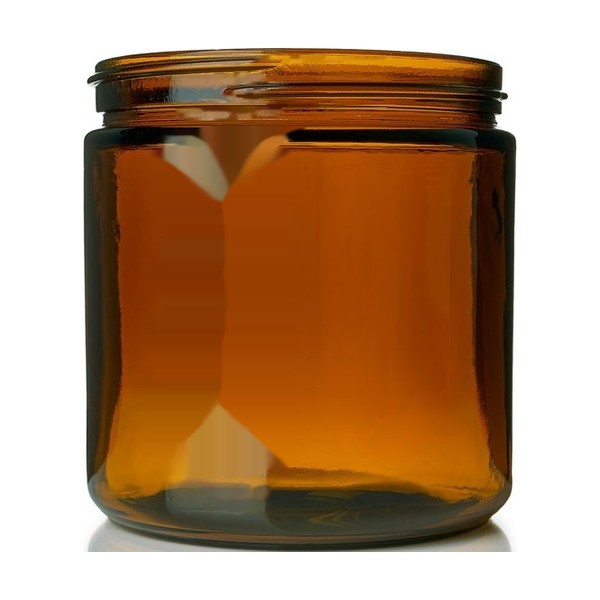 16 oz · 89-400 · Glass
 9 oz · 70-400 · Glass
 4 oz · 58-400 · Glass · Clear
 4 oz · 58-400 · Glass · Amber · 2.7 in
 6 oz · 63-400 · Glass
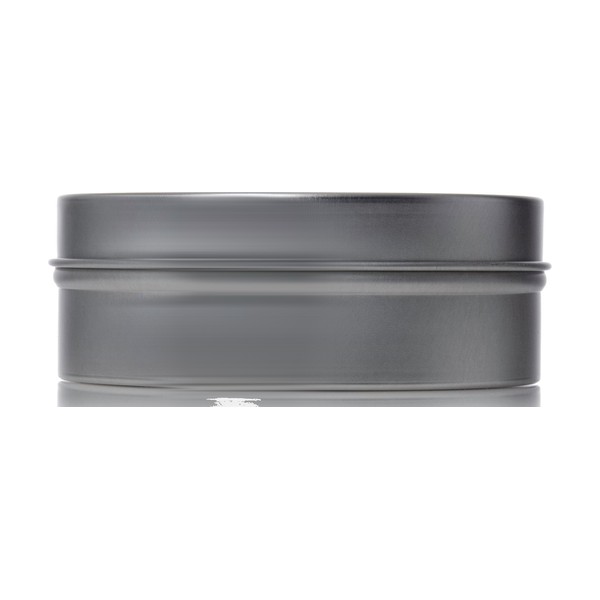 4 oz · Steel
 12 oz · 63-400 · Glass
References
- Etsy, Fees & Payments Policy, last updated October 5, 2026. https://www.etsy.com/legal/fees/
- Etsy, How to sell on Etsy (United States), read October 22, 2026. https://www.etsy.com/sell
- U.S. Food and Drug Administration, Is It a Cosmetic, a Drug, or Both? (Or Is It Soap?), undated, read October 22, 2026. https://www.fda.gov/cosmetics/laws-regulations/it-cosmetic-drug-or-both-or-it-soap
- U.S. Environmental Protection Agency, Conditions for Minimum Risk Pesticides, last updated August 31, 2026. https://www.epa.gov/minimum-risk-pesticides/conditions-minimum-risk-pesticides
- United States Postal Service, Publication 52, Hazardous, Restricted, and Perishable Mail, section 343 Flammable and Combustible Liquids (343.1, 343.21, 343.22), undated page, read October 22, 2026. https://pe.usps.com/TEXT/pub52/pub52c3_022.htm