
What it costs to start
Updated
On this page5
The equipment, roughly in the order you need it
This is the order to buy in, not a shopping list to clear in one go. Each item earns its place by removing a specific failure, and buying ahead of the failure ties up money the season needs.
- A boiling-water canner with a rack, deep enough to cover jars by an inch or two.
- A wide, heavy pan. Wide matters more than large, because depth is a cause of both soft set and darkening.
- A jelly or candy thermometer reading above 220F.
- A wide-mouthed canning funnel, a ladle, a headspace tool.
- A scale that reads to the gram.
- Jars, flat lids and bands.
Where the money actually goes
The equipment is not the cost. People budget for pans and thermometers and are surprised by what actually dominates, which is set by the ratio rather than by anything you choose.
| Cost | Bought in | What that does to you |
|---|---|---|
| Fruit | Flats or by the pound, in season | All of it, up front, once a year |
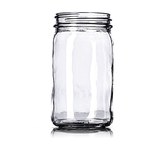
| Jars | Cases of 36 to 108 | You own the case whether you fill it or not |
| Flat lids | Boxes, and single use | A recurring cost nobody budgets |
| Labels | Print runs | Specified to a jar, so order jars first |
The cost that gets forgotten
There is one line nobody includes in a first estimate, and it is the one that arrives before any revenue does.
Flat lids are single use. Bands are reusable and the flats are not, so every batch consumes lids, and at volume that is a line of its own rather than a rounding error. That is on two-piece lids.
Energy
Energy is small per batch and not small across a season, and it is the line most likely to be left out entirely. A jam pan holds a rolling boil for a long time and a canner holds one for longer. Worth metering once across a full day of production so the figure in your pricing is measured rather than assumed. A gas hob and an electric one are different enough that borrowing somebody else’s number is not worth doing.
A long boil and then a canner at a rolling boil is a real amount of gas or electricity on a thin-margin product. It belongs in the per-jar cost, and it is in the calculation on when it pays for itself.