How it looks on a shelf
Updated
On this page4
What a buyer reads before tasting
Nobody tastes before buying at a market stall and nobody tastes at all in a shop. Everything that decides the sale happens before the jar is opened, which makes presentation part of the product rather than a wrapper around it. Three things get read, in order, and the order is not the one most makers optimize.
| What they see | What they conclude |
|---|---|
| Deep, even color | Good fruit |
| Dark or dull color | Old, or overcooked |
| Cloudy jelly | Something is wrong with it |
| Crystals | Cheap, and mostly sugar |
| An uneven surface or short fill | Careless, or short measure |
None of those conclusions is necessarily right, and all of them are made in about a second.
Which failures to spend effort on
Some presentation faults lose sales and some are invisible to anybody who is not another jam maker. Spending effort on the second kind is the most common way a careful producer wastes an afternoon.
The visible ones, if you are selling retail. A soft set is a complaint; a cloudy jelly is a jar nobody picks up, and it never becomes a complaint because there was no sale.
The jar shape decision
Shape is the one presentation choice that is expensive to reverse, because the label, the case and often the filling setup are specified to it. Decide it once, early, with a filled jar in your hand rather than from a catalog photograph, and be aware that the shape which looks best empty is not always the one that looks best full.
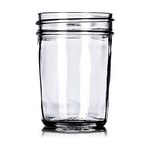
A tapered jam jar shows the product and lets a spoon reach the corners. A mason jar reads as homemade. Both are legitimate and they are aimed at different buyers, which is a positioning choice rather than a quality one.