Buy a full case and the price per unit drops automaticallyRequest a sample
AccountCart0
All ContainersBottlesJarsCaps & ClosuresPumps & SprayersTubs & PailsJugsDroppersTinsTubesAccessories
Industries
Learn
Bottling

Labels that stick to a sticky product

Updated

On this page8
Honey gets on the outside of the jar, and it gets there before the label does. Most first-batch labels fail for one of three reasons, and all three are fixed before the label is ordered rather than after it peels.

Why they fail

  • The jar was not clean. A film of honey under a label is what most peeling comes down to.
  • The jar was cold, or wet. Most pressure-sensitive adhesives do not bond to cold or damp glass, and a jar out of cold storage sweats.
  • The material was wrong for the environment. Paper labels in a humid shed or a refrigerated display wrinkle and lift.

Surface

Wipe the jar with a cloth and a little warm water, then dry it fully. Do it after filling and capping, because filling is what puts honey on the outside in the first place. Label last, on a dry jar at room temperature.

Material

Polypropylene or vinyl rather than paper for anything that will be handled, chilled, or sold outdoors. Paper looks and feels better and is the right choice for a dry indoor shelf and the wrong one for a market in the rain.

The glass curve matters. A label wider than about a third of the jar's circumference will lift at the edges on a strongly curved jar. Hex jars are worse than straight-sided ones, because the flat panels are narrow. Size the label to the panel, not to the design.

Adhesive

Permanent rather than removable, and apply at room temperature. If jars are going into refrigerated display, say so when ordering, because there are adhesives formulated for it and standard ones will let go.

Where to put it

Front panel at eye level in the jar's normal standing position, with the net weight where a buyer looks for it. Leave the shoulder clear; labels wrapped over a curve lift first at the top.

What must be on it

The federal floor is the word honey, net weight, and the name and address of whoever is responsible. Your state usually adds to that, sometimes including a minimum type size for a home-kitchen disclosure.

That is what every honey label must say and selling under your state's rules, and both are worth settling before you order a thousand labels.

The surfaces you would be sticking to
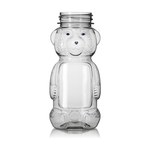
The panel curvature here is its own problem, and an adhesive that holds on one shape lifts on another.
5 oz Clear PET Honey Bear Bottle
5 fl oz · holds 7 oz honey · 38-400 · PET · to 120F
Honey container.
Quote
See it
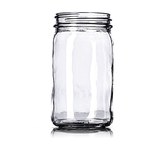
8 oz Clear Glass Paragon Jar
8 fl oz · holds 12 oz honey · 58-400 · Glass · to 300F
Glass mason and paragon jar.
$0.91
each
See it
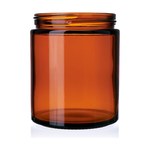
6 oz Amber Glass Straight-Sided Round Jar
6 fl oz · holds 9 oz honey · 63-400 · Glass · to 300F
Glass straight sided jar.
$0.74
each
See it
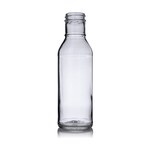
Glass Sauce Bottle
12 fl oz · holds 18 oz honey · 38-400 · Glass · to 300F
Glass sauce bottle.
$1.35
each
See it

References

US Food and Drug Administration. Guidance for Industry: Proper Labeling of Honey and Honey Products. fda.gov
Michigan State University Extension. Rules and regulations for selling honey in Michigan. canr.msu.edu
Texas A&M AgriLife Extension (2024). Selling Honey in Texas (NUTR-PU-146). agrilifeextension.tamu.edu
Label content requirements are federal and state law and they change. Your state department of agriculture is the authority, not this page.