
Bottling
Glass or plastic
Updated
On this page5
This reads like a decision about how the jar looks. It is mostly a decision
about how warm your honey is when it goes in, and that is not obvious from any product page.
The real question is temperature
Honey gets warmed more often than people expect. To pour it cleanly, to get it out of a bucket, and always after it has been liquefied from crystallizing. Those temperatures are where the material decision actually gets made.
Every honey bear we carry is PET rated to 120F. So is every oval honey
bottle. Warm honey much past that and the container softens and distorts. The HDPE honey bottles run
to 190F and the glass to 300F.
What that looks like in the catalog
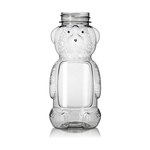
8 fl oz · holds 11 oz honey · 38-400 · PET · to 120F
PET, and the ceiling is 120F. Fine for honey at room temperature, wrong for honey you have warmed to pour.
Quote
See it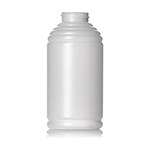
16 fl oz · holds 21 oz honey · 38-400 · HDPE · to 190F
Same idea in HDPE, rated to 190F. The skep shape rather than the bear, and it takes a warm fill.
Quote
See it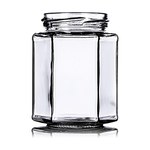
9 fl oz · holds 12 oz honey · 63TW · Glass · to 300F
Glass to 300F. Takes anything you will do to honey, and shows the color, which is most of why people buy it.
Quote
See itWeight and breakage
Glass is heavier, which matters twice: once at the market when you carry it, and again if you ship, where the weight is the cost. It also breaks, and a broken jar of honey in a box ruins everything around it rather than just itself.
Plastic survives the drop and looks like plastic. At a farmers market that is a real difference in what people will pay.
Which to choose
- Selling at a market, filling cool: either works. Glass sells at a higher price.
- Warming honey to fill: glass or HDPE. Not PET.
- Shipping: plastic, or glass with real dividers and a higher price to cover it.
- Bulk to a bakery: HDPE, every time.
Read next
References
Our own catalog. The containers, capacities, neck finishes, materials, temperature ratings and prices on this page are read from the products we actually stock, not from a published source. Where this page states a physical fact about honey rather than about a container, it is established on reading the moisture, which carries the source.
Specifications are the manufacturer's published values. Prices and availability were
observed 2026-08-14 and are checked again when you order. Verify fitness for your own product.