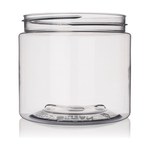
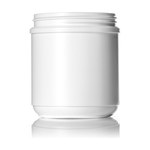
Tub or pouch
Updated
On this page6
The format decision in this category is a moisture decision wearing a marketing decision's clothes.
The barrier question first
These powders are hygroscopic and their shelf life depends on excluding humidity. So the first question is not what looks better on a shelf, it is which format keeps water out over three months of daily opening.
What a tub gives you
Rigidity, a wide mouth a scoop fits into, a flat rim that takes an induction seal, and room for a desiccant. It stands on a shelf and it survives being knocked about.
Against that it is bulky, expensive to ship, mostly air by volume for a low-density powder, and the lid is a barrier only if the liner is specified properly.
It is also the format customers expect for a daily-use product, which is worth something.
What a pouch gives you
An excellent barrier while sealed, particularly foil-lined, and a much better shipping profile: lighter, flatter, less void.
Against that, the zip is a weaker barrier than an induction seal once opened, scooping from a pouch is awkward, and a pouch cannot easily hold a scoop or stand reliably as it empties.
Pouches suit refills, single-serve and anything bought as a resupply by a customer who already has a tub.
Choosing
Tub for the primary daily-use product, with an induction seal and a specified liner. Pouch for refills, which is better for the customer's cost and your shipping and lets the tub last.
A refill program is also the most defensible sustainability claim available here, because it is arithmetic rather than adjective: one rigid container, many refills.
What does not work is a pouch as the only format for a three-month daily product. The zip will not hold the barrier for the life of it.