Lids, liners and the scoop
Updated
On this page6
The closure system on a supplement tub is three separate parts, and brands routinely specify one of them and accept whatever arrives for the other two.
Three components, three decisions
The lid, which holds it shut. The liner or induction membrane, which is the actual moisture barrier. And the scoop, which is the customer's measuring instrument.
Only one of those is usually chosen deliberately, and it is the wrong one.
The liner is the barrier
A threaded lid on a tub is containment. Over three months of daily opening a hygroscopic powder will equilibrate with the room through an inadequate liner, and everything downstream, caking, dosing drift, mold risk, follows.
Specify the liner material. Better still, specify an induction membrane, which gives a genuine hermetic barrier and tamper evidence in one part.
And where the formula is particularly hygroscopic, add a desiccant, which buys margin against the moisture that enters during use rather than preventing entry.
Choosing a scoop
Material matters more than it looks: a rigid scoop levels cleanly, a flexible one flexes and delivers a different volume. Shape matters too, since a scoop with a rounded base cannot be leveled reliably.
And capacity is nominal. The supplier's stated volume is not your serving weight; the relationship is your powder's bulk density, which is yours to measure.
So pick a scoop whose leveled volume, filled with your blend, comes close to the serving you intend to declare, then declare the weight alongside it.
Fit and finish
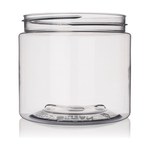
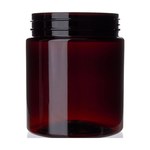
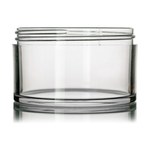
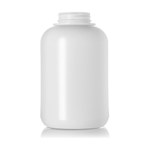
Lid and tub are ordered against a matching neck finish, and an induction liner needs a flat clean rim to bond to.
Settle all three before ordering tubs in quantity, because the liner constrains the lid and the lid constrains the tub, and changing any of them later usually means changing the others.
Finishes we stock, and what a scoop fits through