
How do I sell jam at a farmers market?
Updated
On this page9
Confirm that your state lets you sell jam at markets, then apply to the market early with your registration, sample labels and a certificate of insurance, check whether the city or county wants a temporary vendor permit, and set up a sampling station only if you can meet the handwashing and covering rules. At the table, every jar needs its full label, some states also want a sign stating the jam is homemade, and your price and payment options should be readable from a step away. This page runs in the order you meet each requirement, from the application months ahead to packing up after the last customer.
Before the season: confirm the market is a legal venue for you
Most home food laws allow farmers markets, but states do not all treat them the same way.
- Some states limit you to events and markets. Wisconsin allows home-canned jam at community or social events, flea markets and farmers markets in Wisconsin, and not sales from home [1].
- Some require a market-specific license. In Rhode Island, where cottage registration covers baked goods and jam is limited to farm kitchens, cottage registrants who sell at farmers markets need a separate retail food peddler license [2]. In Nevada, cottage sales at markets are to licensed farmers markets [3].
- Some leave the venue open and limit the buyer instead. Virginia's July 2026 FAQ lets exempt producers sell "at any location," but not for resale, on consignment, to retail food establishments or other businesses, or across state lines [4].
Your state's venue rules are on your state page, linked from the fifty-state table.
The market application
Markets set their own rules on top of the state's, and they usually ask in winter for a season that starts in spring. Expect to send:
- Proof you are legal to sell: your state registration or permit, or a note that your state requires none, with the statute cited.
- Sample labels for every product, including your state's required statement.
- A product list. Some markets limit how many jam vendors they accept or require that fruit be locally grown; ask.
- A certificate of insurance. Some markets require each vendor to carry liability coverage [5]. Many also ask you to indemnify the market, meaning you pay its legal costs if a customer sues it over your stall. UC ANR suggests asking your insurer to name the market as an "additional insured," which it says typically costs $50 to $100 a year [6]. Coverage is explained on insurance, licenses and sales tax.
- The stall fee, flat per day or a share of sales. Put it in your cost per jar.
Permits beyond the market's own
Ask the market manager which permits vendors usually hold, then confirm with the agency. Three are common:
- A local business license, from the city or county clerk.
- A sales tax permit, from the state revenue department, if jam is taxable in your state.
- A temporary food permit for anything beyond sealed jars. Michigan's guidelines, for example, say a booth serving full meals needs a temporary food establishment license from the local health department [7]. Sampling may or may not trigger one, depending on your jurisdiction.
Sampling
A taste sells jam, and it is the one thing at the stall that brings an inspector's food handling rules into play. Rules vary by state and county, so get your local health department's sampling sheet. These two state documents show what to expect.
| Requirement | South Dakota (SDSU Extension, 2019) [8] | Michigan (MDARD, 2015) [7] |
|---|---|---|
| Handwashing | Warm running water (the FDA Food Code minimum is 100°F), soap, single-use towels; wash at least 20 seconds | Handwashing within about 15 feet of your space; one option is a 5 gallon insulated container with a spigot, draining into a bucket of equal or larger size |
| Barriers | Utensils, deli sheets or single-use gloves; individual toothpicks so customers take one sample without touching others | Disposable gloves, single-service utensils, napkins, tissues or toothpicks |
| Protection | All food covered; sneeze guards or plastic coverings required; different samples in separate containers to keep allergens apart | Canopy or overhead cover outdoors unless the food is prepackaged; wrapping, sneeze guards or other barriers |
| Portions | Single-use cups or pre-portioned pieces | Bite-size portions only |
| Utensils | Cut-produce tools replaced with clean ones every two hours | Soiled knives and cutting boards replaced every four hours; sanitizer at 50 ppm chlorine, 12.5 to 25 ppm iodine or 200 ppm quaternary ammonium |
| Which jam | Home-processed jams and jellies must be verified as safely processed under the state's home processed food law | Not specified |
A simple jam sampling setup that fits both: one open jar per flavor, spooned by you onto individual tasting spoons or crackers, each flavor in its own covered dish, a handwashing station within reach, and a trash can. If a sample contains an allergen (nuts in a conserve, for example), label the sample dish. Discard an open sampling jar at the end of the day rather than selling from it.
Setting up the table
Labels on every jar
Every jar you sell needs the full label: the product name, net weight, ingredients, allergens, your name and address, and your state's statement. A market is not an exception. See what a jam label must say.
Signs some states require
Some states want the disclosure on a sign as well as the jar, or instead of the jar.
| State | Point-of-sale requirement |
|---|---|
| Wisconsin | Sign: "These canned goods are homemade and not subject to state inspection." [1] |
| Colorado | At the point of sale: "This product was produced in a home kitchen that is not subject to state licensure or inspection. This product is not intended for resale." [9] |
| North Dakota | The statement may go on a sign at the point of sale or on the label [10] |
Check your own state's page; these are examples, not the full list.
Display and stock
- Keep stock in the shade and out of a hot car. Canned jam keeps best at 50 to 70°F [11].
- Display one open-faced jar of each flavor so color shows, and keep the rest boxed under the table.
- Put prices on a sign large enough to read from the aisle, with the jar size next to each price.
- Gift sets and jar toppers are covered on gift sets and shelf presentation.
Taking payment
Take cash and at least one card or phone payment. Published card and app fees run from about 1.9 to 3.3 percent, most with a per-sale charge of 10 to 30 cents [12]; the figures and their effect on your price are on how to price jam.
Deciding what to bring
There is no published data on which jam flavors sell best at markets, so build your own. Start with a short list (three to five flavors in one or two jar sizes), and keep a tally sheet at the table: flavor, size and time of each sale. After four market days you will know your best sellers, your slow movers and your busiest hour better than any rule of thumb. For sizes, the most common jar in one October 2026 sample of home jam listings was the 8 ounce half-pint, listed 38 times by 6 vendors [12].
After market day
- Count unsold stock by lot code and log the day's sales by flavor and size.
- Add the day's sales to your running total if your state has a cap.
- Note any jar that came back unsealed, chipped or sticky and pull it.
- Write down any questions customers asked that you could not answer: ingredients, allergens, sugar content. They tell you what to put on a sign.
Plan the season's biggest weeks next
The weeks before the winter holidays bring gift buyers and indoor holiday markets, long after the fruit is gone. Planning fruit and stock for them starts in summer: see selling jam for the holidays.
Top picks
Top containers for jams and preserves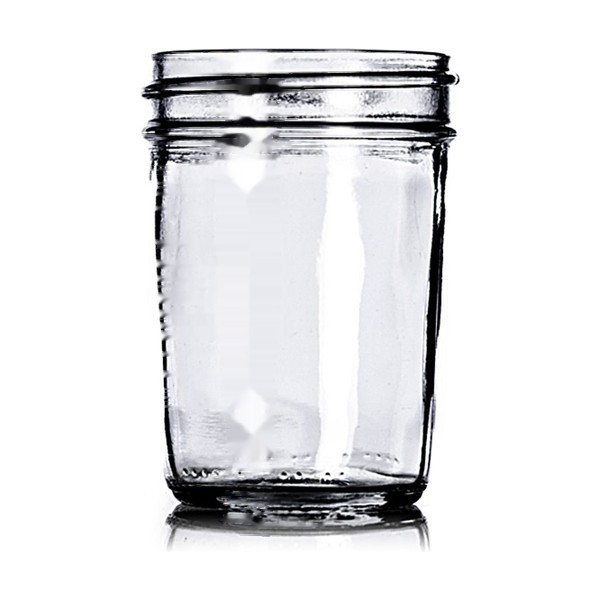 8 oz · 70-450G · Glass · 3.8 in
 8 oz · 58-400 · Glass
 12 oz · 70-450G · Glass
 16 oz · 70-450 · Glass
 32 oz · 70-450G · Glass
 8 oz · 70-450G · Glass · 3.5 in
 12 oz · 63-400 · Glass
 16 oz · 70-450G · Glass
References
- Wisconsin Department of Agriculture, Trade and Consumer Protection, Selling Home-Canned Foods, not dated (viewed October 2026). https://datcp.wi.gov/Pages/Programs_Services/FSHomeCannedFoods.aspx
- Rhode Island Department of Health, FAQs: Cottage Food Manufacturing in RI, November 2022. https://health.ri.gov/sites/g/files/xkgbur1006/files/2025-02/FAQs-Cottage-Food-Manufacturing-in-RI.pdf
- Southern Nevada Health District, Cottage Food FAQ, September 24, 2026. https://www.southernnevadahealthdistrict.org/permits-and-regulations/cottage-food-operations/cottage-food-faq/
- Virginia Department of Agriculture and Consumer Services, Virginia's Home Food Processing Exemptions FAQ (VDACS-FSP-EXFAQ-REVJUL2026), July 2026 (hosted by the Virginia Department of Health). https://www.vdh.virginia.gov/content/uploads/sites/126/Virginias-Home-Food-Processing-Exemptions-FAQ-July-2026-1.pdf
- University of Wisconsin Extension, Wisconsin Local Food Marketing Guide, Introduction to Insurance Considerations, posted June 2023. https://foodsystems.extension.wisc.edu/files/2023/06/farm4-introduction-to-insurance-considerations.pdf
- UC Agriculture and Natural Resources, Insurance: Protect Your Assets (Cottage Foods), updated February 26, 2025. https://ucanr.edu/site/cottage-foods/insurance-protect-your-assets
- Michigan Department of Agriculture and Rural Development (published by Purdue Extension FoodLink), Guidelines for Providing Safe Food Samples, updated March 4, 2015. https://extension.purdue.edu/foodlink/includes/pubs/Sampling%20at%20Farmers%20MarketsMI.pdf
- South Dakota State University Extension, Braun, Meyer and Larsen, Guidelines for Serving Samples at the Farmers Market, updated August 28, 2019. https://extension.sdstate.edu/guidelines-serving-samples-farmers-market
- Colorado Department of Public Health and Environment, Cottage Foods Act, not dated (viewed October 2026). https://cdphe.colorado.gov/cottage-foods-act
- North Dakota Department of Health and Human Services, Cottage Food, not dated (viewed October 2026). https://www.hhs.nd.gov/food-and-hospitality/cottage-food
- National Center for Home Food Preservation, Storing Home Canned Jams and Jellies, October 2005. https://nchfp.uga.edu/how/make-jam-jelly/jams-jellies-general-information/storing-home-canned-jams-and-jellies/
- Homegrown, Knox, How to Sell Homemade Jam, October 13, 2026 (commercial platform; author is a cofounder). https://findhomegrown.com/blog/how-to-sell-jam-from-home