How long do I process my jam at my elevation?
Updated
On this page8
It depends on two things besides your elevation: whether you sterilized the jars, and whose recipe you are following. A USDA or NCHFP jam recipe in sterilized half-pints or pints processes 5 minutes up to 1,000 feet, 10 minutes from 1,001 to 6,000 feet and 15 minutes above that [1]. Skip sterilizing, or follow a recipe written for a 10 minute process, and the time starts at 10 minutes and climbs in 5 minute steps: 15 minutes from 1,001 to 3,000 feet, 20 minutes to 6,000, 25 to 8,000 and 30 to 10,000 [2][3]. Answer four questions and the calculator returns one number, from one chart, never a mix of the two.
The four questions
| Question | Why it matters |
|---|---|
| Where is the recipe from? USDA, NCHFP or So Easy to Preserve; a recipe written for a 10 minute process (most Ball recipes); or another tested source | Each source's base time belongs with that source's own altitude steps |
| Did you sterilize the jars? | USDA's 5 minute time assumes sterile jars. Without sterilizing, NCHFP calls for a 10 minute process plus altitude [2] |
| What size are the jars? | Guide 7 times are for half-pints and pints [1]. Smaller jars take the time for the next size up that was tested; larger jars have no tested jam time [4] |
| Boiling water or atmospheric steam canner? | A steam canner uses the same tested time, as long as the total stays at 45 minutes or less [5] |
Then enter your elevation in feet. If you do not know it, a topographic map or your county's website will have it; does elevation change how I make jam explains what else elevation changes in the kitchen.
The two charts the calculator chooses between
| Elevation | Sterilized-jar chart (USDA 5 minute recipes) | Ten-minute chart (unsterilized jars, or a 10 minute recipe) |
|---|---|---|
| 0 to 1,000 ft | 5 min | 10 min |
| 1,001 to 3,000 ft | 10 min | 15 min |
| 3,001 to 6,000 ft | 10 min | 20 min |
| 6,001 to 8,000 ft | 15 min | 25 min |
| 8,001 to 10,000 ft | 15 min | 30 min |
| Source | Guide 7, half-pints or pints [1] | NCHFP 10 minute rule [2], with the 5 minute altitude steps in South Dakota State's water bath chart, which cites the 2016 Ball book [3] |
Guide 7's own table has three rows (0 to 1,000, 1,001 to 6,000 and above 6,000 feet) [1]. The calculator spreads it across the same five bands as the ten-minute chart so you can compare the two side by side; the minutes are unchanged.
Why it never mixes them
The mistake to avoid is taking one source's base time and another's altitude steps: Ball's 5 minute steps added to USDA's 5 minute base, or USDA's three bands laid over a 10 minute base. Each source tested its base time with its own adjustments, so the calculator keeps them together. If your recipe prints its own altitude chart, use that chart; the calculator says so and gives no number, because a recipe with a 15 or 20 minute base (Guide 7's peach-pineapple spread is one, at 15 minutes for half-pints at sea level) has adjustments of its own [1].
Which chart is shorter, and when that matters
Wherever the two charts differ, the ten-minute chart is the longer one. The extra minutes of heat matter most for fruits low in natural pectin, and UGA's bulletin says pre-sterilized jars are preferred when the fruit may not be naturally high in pectin [6]. For strawberry, cherry, peach, pear and blueberry, the calculator suggests sterilizing the jars and using the shorter chart. NCHFP also notes that some canners lengthen a 5 minute process to 10 minutes by choice, which removes the need to sterilize the jars [2].
At 1,001 to 3,000 feet: 15 minutes, and where 12 comes from
Kitchens in the 1,001 to 3,000 foot band meet two different numbers for unsterilized jars. UGA's bulletin on processing jams says to "add 1 minute of sterilizing time for each 1000 feet of altitude" [6]. Read as an adjustment to the 10 minute process, that gives about 12 minutes at 2,700 feet. Stepping by band, as both Guide 7 and the Ball chart do for processing filled jars, gives 15 [1][3].
The calculator uses 15 minutes. NCHFP's own wording is 10 minutes "plus any altitude adjustments," without a per-minute rule, and the 1 minute per 1,000 feet rule NCHFP does publish is for boiling empty jars to sterilize them, a different job [2]. Fifteen minutes agrees with both band charts and is never shorter than the per-minute figure at any elevation. If you want the shortest time for a soft-setting fruit at that elevation, sterilize the jars: the sterilized-jar chart gives 10 minutes.
Jar sizes the calculator accepts
| Jar | Time used | Why |
|---|---|---|
| 4 oz | Half-pint time | NCHFP's rule for a jar smaller than any tested size: use the time for the next larger tested jar [4] |
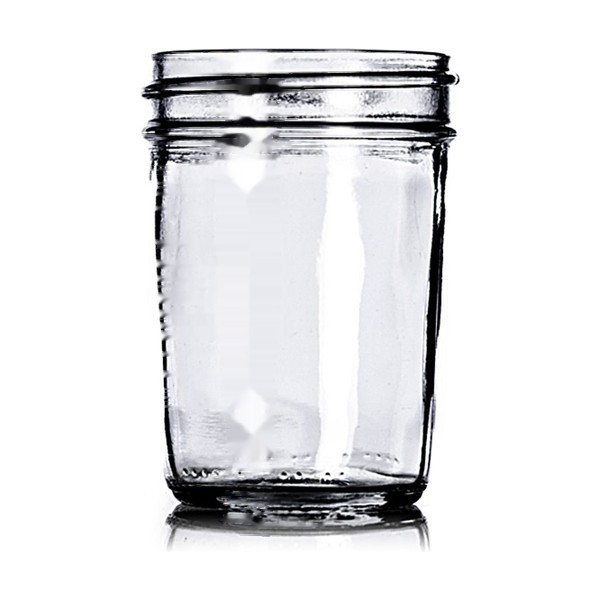
| Half-pint (8 oz) | Half-pint time | Tested size [1] |
| 12 oz | Pint time | Next larger tested size [4] |
| Pint (16 oz) | Pint time | Tested size [1] |
| 24 oz, quart or larger | None | No known safe process exists for a jar larger than the largest one studied [4] |
In both jam charts the half-pint and pint times are the same, so jar size changes the answer only when it rules a jar out. NCHFP warns that a jar much smaller than the tested one can overcook the food [4], so expect 4 oz jars to take the heat harder than half-pints.
Steam canners
An atmospheric steam canner takes the same processing time as the tested boiling water recipe, adjusted for elevation, and Penn State limits steam canning to processes of 45 minutes or less including that adjustment [5]. Every time in both jam charts is 30 minutes or less, so the calculator will give you a steam time for any jam it accepts. Start timing only once a full column of steam at least 8 inches long is coming from the vent [5]. Setup and venting are on using a steam canner for jam.
Three kitchens, worked through
| Kitchen | Answers | Result |
|---|---|---|
| 500 ft, 4 oz jars, USDA recipe, sterilized, steam canner | Sterilized-jar chart, half-pint time | 5 minutes in steam; sterilize the empty jars 10 minutes first |
| 2,700 ft, half-pints, USDA recipe, not sterilized | Ten-minute chart | 15 minutes; the calculator notes the shorter sterilized route (10 minutes) |
| 7,200 ft, pints, Ball recipe | Ten-minute chart | 25 minutes; no need to sterilize, because a process of 10 minutes or more sterilizes the jars in the canner [2] |
The sterilizing step itself
If you choose the sterilized-jar chart, the calculator also gives the time to sterilize the empty jars: boil them covered for 10 minutes, plus 1 minute for each additional 1,000 feet [2]. It counts any part of a 1,000 foot step as a full minute, so at 2,700 feet that is 12 minutes and at 5,280 feet 15 minutes. Keep the jars hot until you fill them. Methods that do not sterilize (a dishwasher cycle, an oven) are covered on do I need to sterilize my jars.
After the timer goes off
The processing time is one step in a sequence that also includes 1/4 inch headspace and a cooling period of 12 to 24 hours with the jars upright and undisturbed [1][6]. The whole canner routine is on how to process jars of jam in a boiling water canner, the full reconciliation of the two time systems on how long to process jam, and what to do the next morning on checking the seal.
| Process for | 15 minutes |
|---|---|
| Chart used | ten-minute |
| Time is for | half-pint |
Sterilize the jars and this recipe processes 10 minutes.
Some sources give 12 minutes; this calculator uses 15 (see the page).
References
- US Department of Agriculture and National Center for Home Food Preservation, Complete Guide to Home Canning, Guide 7: Preparing and Canning Jams and Jellies, revised July 2015. https://nchfp.uga.edu/papers/guide/GUIDE07_HomeCan_rev0715.pdf
- National Center for Home Food Preservation, Do I Need to Pre-sterilize My Jars Before Canning?, May 21, 2014. https://nchfp.uga.edu/blog/do-i-need-to-pre-sterilize-my-jars-before-canning
- South Dakota State University Extension (Hope Kleine; revised by Claudia Botzet), A Guide to Water Bath Canning, P-00255, 2022 (altitude chart cites The All New Ball Book of Canning and Preserving, 2016). https://extension.sdstate.edu/sites/default/files/2022-10/P-00255-v2.pdf
- National Center for Home Food Preservation, Jar Size Choices Have You Frustrated?, October 8, 2019. https://nchfp.uga.edu/blog/jar-size-choices-have-you-frustrated
- Penn State Extension (Martha Zepp), How to Use an Atmospheric Steam Canner, updated March 17, 2025. https://extension.psu.edu/how-to-use-an-atmospheric-steam-canner
- University of Georgia Cooperative Extension (Elizabeth L. Andress), Preserving Food: Processing Jams and Jellies, FDNS-E-37-1, revised June 2011. https://openscholar.uga.edu/record/23661/files/FDNS-E-37-1.pdf