Labels on a cold, wet bottle
Updated
On this page6
A beverage label spends its life on a chilled bottle, which means it spends its life wet.
Condensation is the problem
A bottle taken from a fridge into a warm room is immediately covered in condensation, from underneath the label outwards.
Paper absorbs it, wrinkles, and lifts. Ink runs. And the customer is holding it while it happens.
This is the defining constraint and it is why almost no commercial beverage label is plain paper.
Stock and adhesive
Synthetic film, polypropylene or polyethylene, rather than paper, which is dimensionally stable when wet.
Or a wet-strength paper with a laminate, if the paper look is part of the brand.
An adhesive rated for wet and cold application and service, which is a specific request: many general adhesives lose grab below a few degrees and never recover.
Tell the printer the bottle will be chilled and wet. It changes the construction they quote.
Application
Onto a dry, clean, room-temperature bottle. Applying to a cold bottle is applying to a wet one.
Which means a chilled-filled product needs to warm and dry before labeling, or be labeled before filling, and both cost time in the schedule.
Overlap the trailing edge on a wrap so the label sticks to itself as well as to the bottle.
Ice-bucket and fridge conditions
Test the way the product is used: a labeled bottle in a fridge for a week, a labeled bottle in iced water for an hour, and a labeled bottle taken in and out of a fridge daily.
The ice bucket is the hardest test and it is real for anything sold in hospitality.
And check legibility when wet, because a label that survives but cannot be read has taken the warning statement and the ingredient list with it.
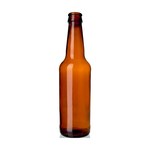
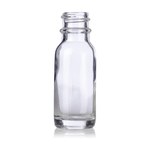
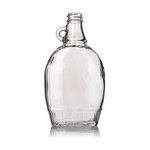
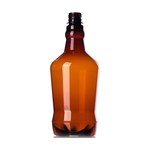
The surfaces you would be sticking to